
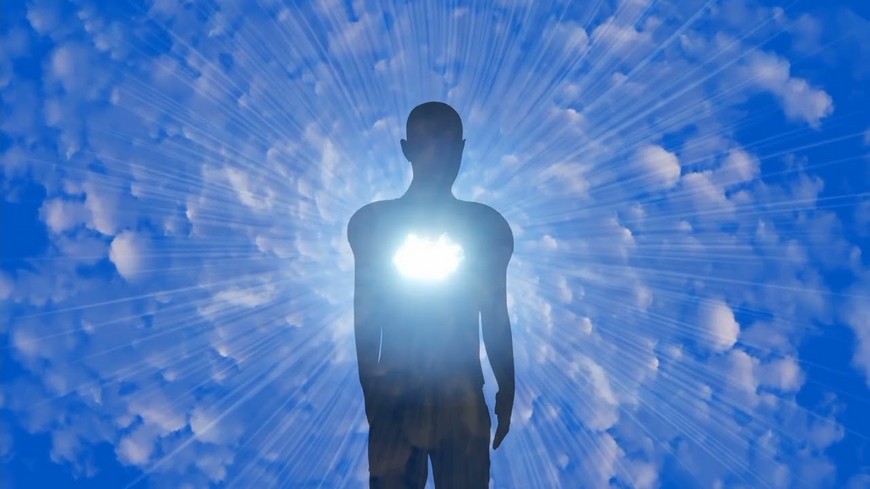
Personality According to the Teaching

What is personality? The question of personality is a philosophical one. Yet at the same time, it is also a practical one. Because all of us are personalities, and we have to live among other personalities who surround us and whom we deal with every day. So this is a question both about those around us and about ourselves. Few questions are more relevant.
As we begin this discussion, let us agree that in its context we will take the terms “personality” and “individuality” to mean the same thing. Subtle differences in meaning may exist — especially if one looks closely — but we shall not concern ourselves with that here. To grasp the essence of the phenomenon, we will need both terms in their generalised sense.
Let us begin precisely with individuality. The very notion of “individual” implies the existence of a general whole. If there is no general whole, the individual loses all meaning and simply ceases to exist — after all, it becomes itself only by separating from and standing against the background of the general. Before us stands an individual, a human being. In relation to what is he an individual? What is the collective to which he relates? The answer seems obvious. And more than that: it has, in fact, already been voiced. It is society. Nevertheless, something does not quite add up. Take a crowd of people — are they a unified whole? No. They are a group of individualities. They will never unite to such an extent as to become a true whole in the full sense of the word — even if they look alike outwardly, share the same beliefs, similar thoughts and feelings. It is still a mass — perhaps compact, but made up of separate parts, appearing as a seamless whole only from a distance. Society can be unified only to a certain extent. One cannot say that an individuality has separated from this collective — because it is already separate from the outset. It may have distanced itself, increased the space between itself and other individualities — yes. But it has not separated. That is only an illusion, a result of certain stereotypes at work.
The same holds true for any human collective — be it a family, a nation, a group of like-minded individuals, and so on. All of these are collectives comprised, so to speak, of already-formed individualities, of separate personalities. Therefore, the collective from which individuality becomes such by separating from it must be sought on a deeper level.
On what level? What is this collective? The answers may vary depending on the worldview of the person answering. We approach the question from the perspective of the Teaching, and will provide the answer it offers.
According to the Teaching, this collective is the Spirit. That which we call the soul of the Creator, containing his mind, his personal qualities, his imperfections, and so forth. In essence, his personality. The Creator transformed himself into the Universe in order to embark upon a path of self-knowledge and self-perfection and ascend to a new level of his evolution. And intelligent beings — those whom we call sentient beings — play a central role in this process. Beings like humans. From here on, we shall speak of man, bearing in mind that roughly the same applies to all sentient beings in the Universe.
Within every human resides a particle of the Spirit — that is, a particle of the Creator’s personality. It is this particle that forms the foundation of human personality. The particle of the Spirit is set apart from the collective in which it had been merged with other particles — more precisely, where they had not yet been particles but were a unified whole, so it is not entirely accurate to speak of them as separate particles in this context — and it gains individuality. One could say that a human personality is a particle of the Creator’s personality, cast out into free voyage. It retains a connection with other individuated particles and with the Spirit as a whole, yet at the same time gains its own free will and may evolve along its own unique path.
Man does not live only once. He is born, dies, and is born again. However, only the physical body dies in the common sense of the word — that is, ceases to exist. The personality, after a due span of time, is born in a new body. This is referred to as reincarnation or transmigration of souls, implying that the soul is the carrier of the personality. If we avoid delving into terminology disputes and clarifications for now, this can be accepted. So, the soul passes from body to body. But everyone must have lived once for the first time. What happened then? A particle of the Spirit was separated from the realm of the Spirit and gained its first body. Thus a new individuality, a new personality, came into being. Such a personality expresses the Creator’s positive qualities, as well as his imperfections, which take the form of various negative human traits and vices. How this set is formed is difficult to say — and not particularly relevant at this point. The main thing is that a new personality arises with a unique set of what we might call basic characteristics. It arises in unique conditions — a combination of place, time, and surroundings that will never again be repeated, not for any other personality. This alone already makes it unique and inimitable. And that is just the beginning. It must go on to develop, acquiring ever greater uniqueness.
With each birth, a person acquires new experiences — again, of a kind that no one else, anywhere or ever, can gain. The experience of one life overlays that of another, and another, and another, producing an increasingly complex and original combination. At the same time, one’s internal moral map changes. A struggle with flaws and vices takes place — it always does, in one way or another, with more or less success — some are overcome, others pushed back, even if only slightly. Positive qualities are cultivated to take the place of negative ones. This too occurs in a unique way, slightly differently for every personality, again adding originality.
Therefore, every personality is truly unique and unrepeatable. There has never been, is not, and never will be another exactly like it in the Universe — and there cannot be. However great the resemblance between two people — whether in appearance, character, habits, thinking, beliefs, or anything else — they will never be completely alike. Every human being is a one-of-a-kind personality, a manifestation of one of the infinitely diverse possibilities. They are original both in their background, accumulated through their lives, and in what they become in their current life
Hence, there is no need to fear the loss of one’s individuality. For many, this becomes a psychological issue, and they begin to go to great lengths — sometimes rather peculiar ones — to assert that they are not like everyone else. These efforts are unnecessary. Of all the things one might worry about, this is not one of them. You are already not like everyone else. Even if you wished to become so, you could not. A personality cannot lose its individual traits, cannot become an exact replica of another, cannot merge with anyone into a complete whole. At least, not at present. The conditions under which such merging becomes possible will be discussed later.
So, let us return to the question with which we began. What is personality? Human personality is a particle of the Creator’s personality. That is what must be clearly understood. A particle of the Creator’s personality that exists almost autonomously, accumulates a unique and original experience, and, under the influence of that experience, becomes distinctive, different from all others, and unrepeatable. What follows from this? That man is, in fact, more than man. He should not be regarded as a base creature of no significance. He is not merely a body and animal instincts. He is a particle of the Creator that has “acquired” human qualities and features, become humanised. But even as he has become human, he remains a particle of the Creator — of that same Spirit that underlies human personality.
It turns out that personality has, as it were, two levels. On the surface, it is a human being; in its depths — it is the Creator. The Creator, who has acquired countless faces, characters, and biographies. And for a time has forgotten who he truly is.
But if so, why then does man often behave like a base creature, which is sometimes disgusting even to look at? Because within a person the Creator’s imperfections are manifested, taking the form of vices. But these can be worked on, corrected, transformed into positive qualities. And all the experience gained life after life serves this purpose. Man gradually comes to know the world, to understand it better, as well as himself; he learns to distinguish good from evil, to prefer good to evil, and to correct his inner flaws—that is, the portion of the Creator’s imperfections that he inherited. Thus the Creator comes to know and perfect himself. That was the plan.
In terms of his self-knowledge, one could say that each unique personality is a new perspective from which the Creator views and studies himself. Not a single perspective repeats; from each one, the Creator sees something new in himself, something that can be seen in no other way. The Universe contains a colossal number of intelligent beings, sentient beings. There have been many, there are many now, and there will be even more. Each one is a new glance of the Creator upon himself, new knowledge, new understanding. Through this, he may come to know himself so deeply and study himself so thoroughly that it is hard to imagine. And it is precisely for this knowledge, and for the perfection to which it contributes, that the Creator transformed himself into the Universe. In order to divide into countless personalities, view himself from countless perspectives, study himself in detail, and perfect himself through the perfection of each of his particles.
Every personality is priceless. First, it has — or will have in the future, if it has only just entered its first incarnation — a truly unique and unrepeatable experience, and may show the Creator something that no one else can. Second, only it, and no one else, can perfect the particle of the Creator’s soul that it carries within. And until all the particles are perfected, the Creator cannot ascend to a new stage of his evolution and undergo his next transformation. In other words, the fate of the Creator depends on each personality, whether human or another sentient being. It is precisely when a personality ceases to be merely a particle of the Spirit and gains individuality that it acquires such immense significance. A particle of the Creator that has taken on human form is, in a certain sense, even more important than a mere particle of the Creator.
When I say that a personality is priceless, the thought of loss immediately arises. For when something has value to us, we protect it, we do not want to lose it, we do not want it to perish. Yet in this case, the focus should be placed elsewhere. Because personality cannot perish. It is immortal. What dies and disappears is the physical body, which serves as a tool enabling personality to live and act in the material world. Once lost, the personality retains its spiritual essence and energy — that which we, by analogy with the physical body, call the energetic body. This can no longer be killed or destroyed by any means — neither in the material world, where man dwelt before the death of his physical body, nor in the energetic world, where he resides between incarnations. The personality continues to exist, only now in its energetic form. Thus, no matter how many times the body perishes, the personality continues to live, to learn, to accumulate experience, to grow. Hence, in this sense, there is no talk of loss.
However, loss can take another form. If there is a wonderful person beside you who loves you (not necessarily in the romantic sense), and you pay no attention to them, do not notice or appreciate them — is that not a true loss? For you, they do not exist. It is as if they are dead — or even never born. And if they did exist for you, if you saw them and reciprocated their attitude, your life — and theirs too — could become far richer emotionally and spiritually, better, happier. But they are absent. It is a loss you are not even aware of. And what if it is the Creator himself beside you — in the form of a unique and unrepeatable, and thus incredibly interesting personality, no matter how they may appear in everyday life — and you do not know this and do not see anything? Is that not a tragic loss? And if you lose all those around you in this way — not understanding who they are and what they are, not knowing how to appreciate them in this sense — is that not a loss a thousand times more tragic? You fail to notice what is priceless — and what you do notice from time to time you value no more than a penny. Because when it comes to the priceless, any price will equal a penny. And if you do not see this goodness, this immortality and pricelessness within yourself, then what is the scale of that loss? What is its tragedy? Who can measure it, or even imagine what a person loses in such a situation?..
For the priceless, which is at the same time immortal, loss is not death, but being unseen and misunderstood. It is lost, gone, as if dead, when it is not seen and the good it could bring to the one who fails to see it is not received.
Now, as to what awaits a personality at the end of its path. It is not death, but a return to where it came from — to the world of Spirit. A particle of Spirit separates from the unified soul of the Creator (separates conditionally, yet still), lives a number of lives in human bodies, perfecting itself in the process, and then, having reached the limit of possible perfection, returns to the unified soul of the Creator, merging with it once again. Only then does the personality cease to reincarnate in material bodies and is also freed from the energetic body. Spirit merges with Spirit, like a drop merging again with the ocean from which it was once drawn. Now that drop has become much purer, and thanks to it, the ocean will become purer. This is how the Creator perfects himself. His personality fragments into many personalities and then gathers again into a single whole. Every moment, a stream of particles separates from the unified Spirit to become individualities, and another stream merges with it, having fulfilled its mission. Does the human personality disappear in that moment? Let us put it this way: it transitions into a new state. Its experience and memory, which it brings with it, become the property of the Spirit as a whole. That is, the newly forming unified personality feels itself as each of the personalities that have merged with it, remembers what they remember, feels what they feel, thinks with their minds as with a single mind. Can we then say that the individual personality has vanished? No. We can say it has expanded, been supplemented, has encompassed all the personalities with which it has merged into a unified whole. Its own memories have remained with it. But now all the other memories — are no longer foreign. They too have become its own.
This is what a personality is, in the broadest strokes and the most important aspects. One can delve further into this subject, explore the details, break down nuances, and raise additional questions along the way.
For example, the Teaching says that particles of Spirit are present in all that exists — in animals, plants, stones, man-made objects, and so on. And if so, then aren’t they all individuals? Especially since at times a simple cat or dog can demonstrate a quite original character and behavioural traits. If answered briefly — not exactly. Of course, the particle of Spirit present in a cat contains the full potential of the Creator’s personality. But the evolutionary level of a cat, let alone a cactus or a boulder, does not allow that potential to fully unfold. What exactly? Thinking, the capacity for cognition, free will, creative abilities, and so forth. So, if a cat is a personality, then it is a personality at the level of a cat, and it does not play the same role in the perfection of the Creator as sentient personalities do. Although the Spirit present in the cat will, in due time, also pass through sentient beings, reveal its potential, and contribute its part to the future transfiguration of the Creator.
In short, much more could be added. But for now, let us limit ourselves to what has already been said. In truth, it is a complex topic. When reading, it may seem that everything is clear. However, there is general, surface-level understanding — the kind where one says “I understand what you mean” — and then there is deep understanding, where one says “I have understood, I have seen a new reality, and it has changed me.” It is good to have at least the first. Especially when it comes to such a difficult topic. But one must strive for the second. And the conversation about personality is not over. And it is unlikely ever to be over. Not because someone will be too lazy to bring it to a conclusion, but because the topic is inexhaustible. Personality in general — as a phenomenon — and any specific personality — is an entire universe, and one could speak of it endlessly.
© Atarkhat, 2023