
Order: Three Aspects

The Being Aspect
Everyone knows the expression “to call to order.” However, it’s not necessarily the case that it means the same thing to everyone or is put into practice in the same way. What is clear is that order is something that ought to be. Generally speaking, if something is wrong, it needs to be brought into order — and then things will get better. Such things seem self-evident. Yet it is precisely this self-evidence that sometimes plays a cruel joke on us. Because we stop justifying what appears self-evident. And thus, we stop understanding it. “It is so because it is so, and what is there to talk about?” Perceptual inertia arises. Inertia that, over time, fades. The day comes when the self-evident suddenly stops being so. The question arises: “But why, actually? Why exactly like this? What does this follow from?” It turns out there is no clear or even remotely well-grounded answer. And then the phase of denial begins. Because why follow something whose meaning is unclear?
This kind of thing happens periodically. Certain ideas begin to be denied precisely because they are self-evident — paradoxical as that may seem. Accordingly, they gradually become scarce.
Something similar is now happening with the concept of “order”. Its value is so obvious that it’s starting to arouse doubt in many, even rejection, as something being imposed. The more slogans and coercion, the less understanding. And this leads to nothing good. Because order is the foundation of everything that exists. The principle of order is manifested at all levels of the world’s existence. It permeates reality from the top down — from the macro level to the micro level — thus shaping it. A human, as intelligent being, learns about the world, learns about the structure of reality. This means he is learning about the order underlying it. For what purpose? In order to consciously follow this order, to learn to align with it, to be a part of it. Otherwise, there is no point in learning. Which means, there is no point in being a intelligent being. Which means — no point in existing at all.
Understanding such things as order is directly connected to the meaning of human life. Therefore, order should not be denied — it must be understood. One must delve into it. And first of all, one must grasp the very principle, at least in broad strokes. Order is the systematic organisation of anything whatsoever. As already mentioned, it manifests from macro to micro — meaning smaller ordered systems make up larger ordered systems. And to understand the significance of order at the micro level, one must first understand its significance at the macro level.
Thus, we should first define the essence of order at the maximum possible scale — that is, for Being itself. Only then can we move on to examining how order manifests itself directly for a human being, and what it means for our everyday lives.
So, Being. The Great Infinite. That which is endless in space and time. A colossal living organism that lives and evolves. This means that there are certain laws operating within it — laws that govern the processes that sustain its life and propel its evolution forward. Some imagine infinity as disorganised chaos. But in fact, it is not. The infinity we are talking about is alive. Which definitively means one thing: it is organised and constitutes a system. Chaos is just chaos; it lacks life, which presupposes certain structures and the processes that occur within them, governed by laws interacting with each other in very specific ways. For life to exist, systemically organised conditions are necessary. In other words, there needs to be an order in which everything interacts with each other..
Being is alive. It lives and gives life to everything that exists within it. It is a global system, living and evolving according to laws that define the principles of existence for all its components. It is the bearer of order in its most vast manifestation. Thanks to everything in Being functioning properly, it continues to exist. And thanks to this global order, everything that exists within Being can also exist.
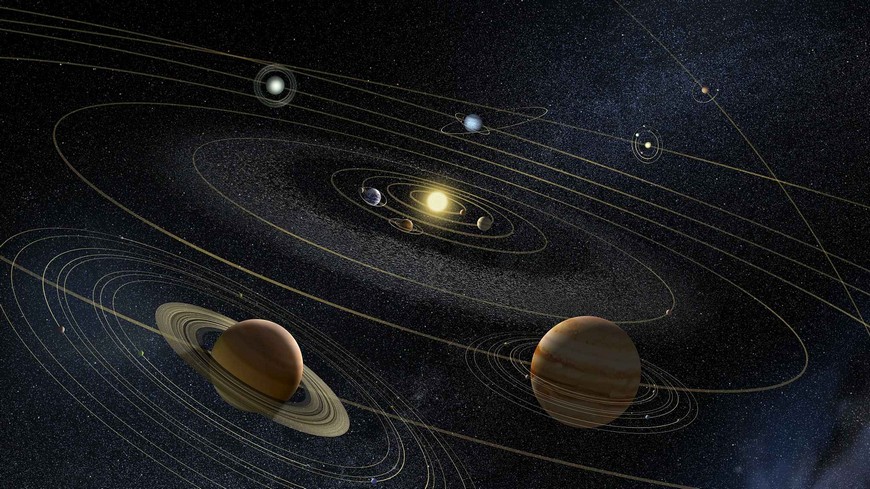
Let’s take our Universe, for example. It is a system too. Galaxies move according to specific laws; planets orbit their stars according to laws; atomic-level processes unfold according to laws. In other words, everything is ordered. The order by which the Universe is structured and lives is a continuation of the order by which Being is structured and lives. The Universe is one of Being’s subsystems, and its order is a particular case of the order by which Being is organised. What are the laws of the Universe? They are forms of action of the Great Principles. In our Universe, these manifest one way; in other Universes or other structures existing in Being, they may manifest differently. But they are the same Great Principles — universal laws common to the entire infinity. The general laws on which the universal order of Being is based.
On these same laws is built, for example, the system we call the human body. It is a specific instance of the laws of the Universe, which in turn are specific instances of the laws of Being. We live because the Universe lives, and the Universe lives because Being lives. And Being lives because it is organised according to certain laws — that is, because it is an ordered system. This is how order manifests from the macro level to the micro level. Thanks to it, both the greatest and the smallest things exist.
From this, we derive the most essential principle: order is life. Accordingly, no order — no life. If order breaks down, the interactions between elements of a system (any system, as such) begin to break down; connections fall apart, processes are disrupted, the necessary functioning of the system fails to occur, disintegration sets in, and the system dies. This applies at all levels — whether it be the Universe, the planet’s biosphere, a state, the human body, or the electronic guts of a computer. If there is order — everything works. If there is no order — everything falls apart.
Therefore, order is the determining factor in the existence of anything at all. This is its significance. And that is why it is so important to understand that significance. A human being does not merely live thanks to order in its global and specific forms. He himself is part of that order.
Or to put it another way: he is someone who can — and must — be part of order. An active mind is the manifestation of the Rational Principle, which plays a vital role in the processes occurring within Being. The global influence of the Rational Principle on Being is made up of the influences of its parts — wherever it manifests actively. These parts are scattered throughout the structures and systems of Being. In our Universe, these include humans and other self-aware entities. They play a determining role in the evolution of the Universe — its very existence or destruction depends on them. They are important to it. But the Universe is also a conscious entity we call the Creator. It plays its own role in the fate of its Universe. And so on. In this way, manifestations of the Rational Principle within different structures of Being determine their future. And by shaping the future of all that constitutes Being, they influence its life.
How do the sentient beings of our Universe and beyond affect what happens? Quite simply: they either assist the universal development, the universal evolution — or they hinder it. In other words, they either uphold and enhance the one order shared by all — each, so to speak, on their own patch — or they violate and break it. As a result, their actions are either creative and life-giving, or destructive and ruinous. Together, they either move the life of Being forward — or do it harm.
What is needed in order to act beneficially, to uphold and refine order? Of course, desire. But above all — knowledge. One must understand this order, know what it is, discern what aligns with it and what does not. In essence, knowledge — whatever kind it may be — is always the knowledge of the world as an ordered system, with the goal of integrating into it as successfully as possible. That may sound formal: “to integrate”. But let that formality not mislead anyone. Because in truth, it’s about learning to align oneself with the laws of the Universe. Beneficial laws that give life. It’s about learning to be a source of good. This learning process is also called “spiritual development”.
A person exists for precisely this purpose — that is, to understand the structure of the world, its order, and to learn to be not a destructive force but, on the contrary, an advanced part of that order. This is our Great Calling. And it is embedded in the human being at the deepest level — much deeper than the instincts that serve the body. It is present and active, influencing what we strive for and what we do. It arises from within and acts like an inner compass, whether we like it or not. Because this is the human calling. That which grants a person the right to live. His place in the world system, in the universal order.
That’s why people have always sought to understand the world and find their place within it. This is one of humanity’s oldest and most powerful desires. It comes from the depths of the soul. A person feels a pressing need to fulfill their destiny; they are drawn to this by the innate manifestation of universal order within them. But it is not yet conscious, and thus it needs to be made conscious. To follow one’s destiny knowingly — this is what a person inwardly strives for. That is why we seek knowledge, ask questions, look for answers, make assumptions, and form theories. This is how religions, philosophies, and all kinds of worldviews and beliefs are born. These are, in a sense, materialised expressions of the desire to understand the universal order and see oneself as a part of it. To understand the universal order, which is part of the order that sustains the life of Being. Being, the Universe, the human being. That which connects them, fuses them into one whole. The drive to understand is, in essence, the drive to live. It is the call of Being sounding within each of our souls.
How successfully we manage to respond to this call and bring its message to life — that is a separate matter.
The Social Aspect
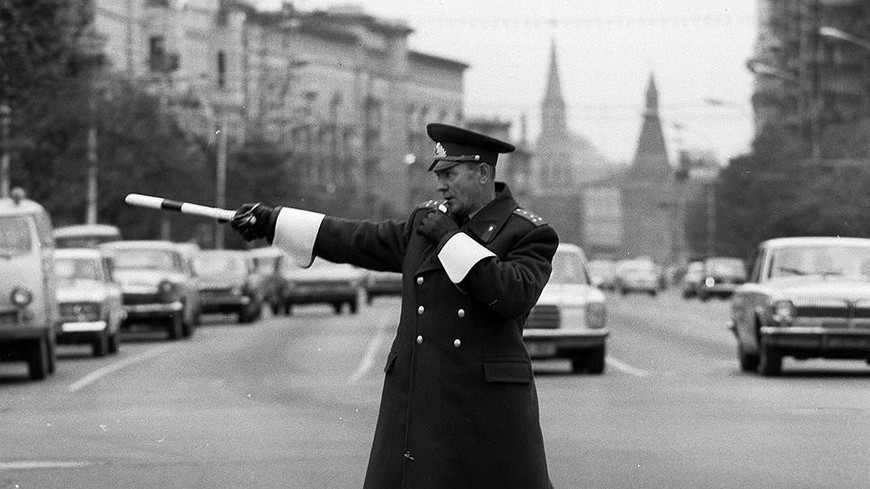 Continuing the discussion about order, let us now touch upon its social aspect. In other words, let’s address the question of how the ontological order — universal in this case, since our Universe is one of the substructures of Being — relates to human society.
Why is this important? Because humanity, as a rational species, represents a manifestation of the Rational Principle, which plays a key role in the perfection of Being and everything within it. The Rational Principle contributes to the emergence of new, more refined forms of order based on the laws of Being and, in our case, of the Universe. It brings into play what can be called a creative approach, fostering the birth of new structures and forms. Thus, the Creator can only ascend to a new stage of evolution if all intelligent races of the Universe fulfill their task properly. And what is their task? To become more perfect themselves and to perfect their environment. What does this require? First and foremost — to understand the structure of the world and realise their purpose. That is, to learn the laws of the Universe, to understand the order by which everything is arranged, to see themselves as part of that order, to learn to align with it and to apply that knowledge creatively — to support evolution, to “push” it forward.
This is why it matters how universal order manifests in human life. Or more precisely, to what extent it manifests. For if humanity is to play its role in the perfection of the Universe (the Creator), then in order to do so successfully, it must itself integrate into the system of universal laws. It must become part of that order. Because as long as humanity contradicts that order, it causes more harm than good: it does not assist universal laws but resists them. In such a state, it struggles to create but finds it easy to destroy. It must come to know these laws — if not fully, then at least sufficiently — organise itself accordingly, and fulfill its purpose.
I’ve said it many times elsewhere, and I’ll say it again here: from the very beginning of its existence, humanity has sought to learn the laws of the Universe, the order by which everything is arranged, and its place within that order. All worldviews, religions, philosophies, spiritual, social, and political doctrines, science itself — these are all attempts to comprehend the universal order, determine humanity’s place within it, and learn to live accordingly. This has been humanity’s striving since the moment it became human. It is imprinted at the deepest level — instilled by nature itself. It is nothing less than innate knowledge of its purpose — without which it wouldn’t exist at all. Purpose, the Great Calling, is the foundation of its life. It resides within and pulls in a specific direction. It pulls regardless of whether a person is consciously aware of it or able to explain it. The deep essence of a human being insists that they do what gives meaning to their existence and confirms their right to life. That’s why humanity has always strived toward what aligns with its purpose: it has always attempted to understand the universal order and to organise itself accordingly. The entire history of humankind is a continuous series of such attempts.
Although it must be admitted that these attempts have, overall, been not particularly successful. Different worldviews and social systems have emerged and then been replaced, over and over again. Over thousands of years, humanity has tried many paths. Unfortunately, an objective understanding of what the universal order is — and what kind of social order should correspond to it — has still not been established. This is evident even from the continued internal divisions, conflicts, violence, immorality, environmental destruction — all of which lead to disintegration. There are creative forces, too; but the destructive forces are so overwhelming that creativity alone cannot significantly change humanity’s course for the better. The battle continues with mixed success. Enlightenment ideals coexisted with slavery; scientific and cultural breakthroughs occurred alongside ideologies of racial superiority and genocide; progressive social doctrines came hand-in-hand with world wars and the destruction of entire cities filled with civilians. How long ago was all this? By historical standards — not even yesterday, but literally just now. And even today, there are places of relative peace and places of living hell. Not to mention the widespread social dysfunction and injustice that persist everywhere. How can humanity, under such conditions, fulfill its purpose? How can it contribute to the evolution of the Universe if it can’t even take proper care of itself and has hovered on the brink of self-destruction for decades? First, it simply needs to survive.
All of this resembles a serious illness. And indeed, it is an illness. Only the organism here is society. What is illness? It is when an organism is “broken”, when it does not function in accordance with the laws by which it is designed, when its internal processes go awry and lead to breakdown. In other words, it is when order is lacking, when coordination and interaction between parts and processes are disrupted. A breakdown of order always leads to what can be called disease — be it the Being itself, the Universe, Earth’s nature, human society, an individual’s body or psyche, or even a mechanism or gadget. It’s all the same phenomenon: a violation of natural order. In the case of humanity, it is also the inability to organise itself in harmony with that natural order. Its organism is not just malfunctioning — it’s unable to fully assemble itself at all.
It keeps trying to understand what this natural order is, keeps experimenting with different forms of social structure and organisation. The general idea is this: society must be structured in accordance with the universal laws, and legislation must be adapted to them; relationships between people and their social interactions must be based on them. This is essentially a vision of a just society — one in alignment with the universal order, in harmony with it. For some, this order is established by God; for others, it’s rooted in the laws of evolution; for others still, something else. The central idea — that social order should correspond to universal order — remains unchanged.
Thus, one of humanity’s goals — and a fundamental one without which the rest are impossible — is to understand the universal order and to structure its life according to its principles. Humanity’s life is an extension of the Universe’s life, and therefore of Being’s life. Everything is interconnected. And when all works in harmony, everything and everyone benefits.
The correspondence between the structure of society and the laws of the Universe (that is, the universal order) must be reflected in very concrete things: social institutions, legislation, education, culture, traditions, and more. At its core, this should be grounded both in an understanding of the laws of the Universe and in humanity’s awareness of its purpose. The structure of society should be such that its institutions are, on one hand, an extension of natural laws, and on the other, give people the means to develop consciously in the right direction and to fulfill their purpose. In fact, these are not two different issues, but two sides of the same coin. Because if humanity’s purpose is so important — and it truly is — then natural laws must support its fulfillment. And so, by organising its life in accordance with natural laws, humanity ensures the conditions it needs to fulfill its destiny. Proper order will become the soil from which a better future can grow.
Unfortunately, this very idea — that there should be order in society — is often manipulated by political frauds and dictators of all kinds. They’ve twisted, tarnished, and prostituted it to the extreme. Show me a dictator who oppresses his people and threatens his neighbors without justifying his actions in the name of order. It happens constantly. As a result, talk of “order” is now associated by many with dictatorship, censorship, repressive laws, and internal terror. If someone speaks of the importance of order, people immediately become suspicious: “Is this the next would-be dictator talking?” This greatly complicates the task for those who genuinely seek improvement and for whom building a better society does not mean a grab for power.
Now, the most pressing question: how, after all, can we understand what this natural order really is? How can humanity uncover the laws of the Universe? Because without that, it won’t be possible to organise social life in accordance with them. If all previous attempts have largely failed, is there any chance now? Has anything changed?
Yes, something has changed. Above all, science — whose very essence and function is to study the world and understand its laws — has reached a level never seen before. At its current peak, it is gradually revealing a picture of both the Universe and the human being. But there are two caveats. First, this very scientific progress has brought us to the brink of self-destruction, as mentioned earlier. Scientific and technological advancement can serve both creation and destruction. Second, the process by which science is building a picture of the Universe is extremely slow. It will take a very long time before it reaches the major discoveries that would give humanity a true understanding of the world and its place in it. And in the meantime? The same problems, and the same precarious balancing on the edge of an abyss.
In order for this dire (to put it mildly) situation to be resolved in a favorable direction more quickly, a Teaching has come into the world. It not only states the importance of understanding the laws of the Universe and organising society accordingly, but also provides specific knowledge of those laws. That is, precisely the thing that could help reorganise society for the better. The Teaching and science can help humanity understand the universal order and build life accordingly. Together, they can pave a path into the future — no matter how lofty that may sound.
One may believe or not believe in the truth of the Teaching — that’s not the point here. The point is that humanity is part of the Universe, and its life is also based on its laws, on the natural order that exists within it. Whether humanity can consciously become a continuation of that order and embody it in its life will determine its future. Will it become what it is meant to be for the Universe — a powerful, creative, perfecting force? Will it build its life on the foundations of natural order, or will it plunge into chaos and be consumed by it? Let us hope for the best.
And our discussion of order and its aspects is not yet over.
The Everyday Aspect
 We have spoken of order in its Being aspect, and of order in its social aspect. Now let us speak of order in its everyday, domestic aspect, thereby completing this brief overview of the topic. Let us descend from the level of the infinite to the level of the individual and see how the principle of order manifests there.
And it must manifest — there is no way it cannot. Because a human being is a particle of Being, and the same laws that operate within Being operate within the human being, and the aims are the same. It would not be too bold to say that a human is Being in miniature. After all, any point of infinity is identical with all of infinity. Therefore, the principle of order, so to speak, descends through a hierarchical chain of systems — from Being, through the Universe in which the Creator dwells, through the Creator himself (that is, our Universe), through society as the context of human existence — and is realised within the individual. And at the same time, there is an ascent along that same hierarchy — for Being is made up of particles, and the realisation of the principle of order within each of them contributes to its realisation at the level of Being as a whole. One cannot exist or function without the other, and they must be considered together.
So, the individual. Any individual. You, me, anyone at all. Each of us is a bearer of order in several of its manifestations. First, we live thanks to the specific structure of our body. Second, we organise our lives in a particular way — from arranging our living spaces to managing our relationships with others.
The body is what gives us the ability to live and act in this world. It is, in itself, a complex system where everything is arranged and functions according to order in its biological form. If this order is disrupted — due to injury or illness — the body functions poorly, and the result can even be death. Although, of course, death will come in any case. But not all deaths are the same. When death comes as the result of aging and natural bodily wear, this is not a violation of order but rather part of it. Because any mechanism, including the human body, wears out and breaks down, and not everything can be fixed. The desire for immortality is an attempt to break this order. The body cannot be used indefinitely. But maintaining it in good working condition, while possible, is essential. The orderly system — the body — is given to a person by Nature at birth; from then on, they are responsible for it themselves. One must, as much as possible, keep the body healthy and functional. It is, essentially, a valuable tool that must be cared for, not broken needlessly, and repaired when necessary — in other words, healed. This is one aspect of the everyday manifestation of order. Nutrition, medicine, physical exercise, hygiene, and all bodily care are part of ordinary human life. Yet the issue here is literally about life and death. And again, by maintaining order within your body, you support order in a particle of Being — and therefore in Being itself.
As mentioned, the body is given to every human already fully formed and with all the necessary “settings.” It grows and functions on its own — you just have to keep it in order. But what we can do with it, as a tool — that’s a different matter.
With it, we can work to form and maintain the social order previously discussed. This involves the brain, speech, and physical actions. If these do not function properly, you are unlikely to contribute meaningfully to society. So, practically speaking, the aspect of order concerning health is directly linked to the social aspect of order.
Another side relates to the maintenance of order in everyday life, in one’s immediate living space.
How important is this? It is of enormous importance. First of all, because this is how a person becomes familiar with the concept of order, begins to understand it at a basic level, and learns to practice it. Again: order in what pertains to the person is a part of the order of Being. Therefore, bringing order to what is around you means maintaining order within Being. That is, you strengthen Being’s life, counteracting its destruction. Your living space is the portion of Being for which you are responsible. You can either destroy it or organise and strengthen it. Yes, on the scale of Being, this may not seem like much. But it is one of the particles that constitute Being. The global order of Being, the order that sustains its existence, is made up of such particles, each of which maintains order at its own level. So, while the task may seem small, it is, I repeat, of utmost importance. And for a person, it’s far from easy, because their strength is proportional to the scale of the task they are given.
When it comes to maintaining order on a household level, understanding what’s happening is especially important. If you do this because of your character, because you have a natural inclination for order, or because you were raised this way — that’s already good. In doing so, you’re already benefiting Being. You might not even realise how important what you’re doing is — but you’re doing it. You’re subconsciously absorbing the principle of following order and applying it. But if you understand what you’re doing — if you’re aware of the connection between your actions and the life of Being — then that gives a huge impulse to your development. When you bring order to your surroundings and maintain it, knowing that at the other end of the thread you’re holding lies the infinity of Being, you feel connected to it. You can do something for it. You are it — here, on this small piece of space under your control. Understanding this, seeing yourself and your place in the world in this light, helps you take a serious step on the path of spiritual growth.
Somewhat paradoxically, such a great task as maintaining life-affirming order in Being is achieved by such modest and simple means as keeping things in order around oneself. But in reality, this is no paradox. Being “assigns” each person the task that matches their capabilities. And greatness is built from the small. Ants, each carrying a grain of sand, could pile up a mountain taller than Everest. Being is changed and revived by its particles. Their seemingly minor labor turns out to be the most important labor in the infinite. Order is one of the directions of this labor.
And what specific kind of order are we talking about? Any kind. I’ve already spoken of bodily order. Then, order in the home. Everything should be arranged properly, items should not be scattered randomly. Just organising books neatly on a shelf is already a contribution to the world’s order, though it might not seem like it. Then comes simple cleanliness and tidiness. Keeping yourself and your living space clean and orderly. You’re not just cleaning your room so it looks presentable — you’re doing something far greater. Then, order in your actions. When you do something, you need to know what you’re doing, why, how it should be done, and try to do everything correctly, in the proper sequence, without fuss or confusion. This is called organisation, and it applies to almost anything. Then, order in your affairs (which some only begin to establish when preparing for death — though there’s no need to wait that long). Then, order in your profession and work processes (including hierarchy and subordination). Then, clarity and order in relationships with others (one of the hardest areas). Then, order in your mind — that is, acquiring and organising knowledge, and forming your own views. Then, observing any agreed-upon rules and commitments. And so on and so forth — up to organising your expenses, watering houseplants on schedule, and preparing meals according to recipes. Order has many expressions. Everything that is structured and functions — whether in Nature or human life — is based on it. Which means you can practice order, so to speak, anywhere, in anything, at any time.
Earlier I said that such a great thing is done by such simple means. Essentially, that’s true — but in reality, many people find it hard. Some are simply not used to order, others don’t know how to organise their activities or maintain organisation. But that’s not a reason to give up on order. On the contrary: it’s a reason to dedicate yourself to it with even more determination and effort. For such people, practicing order is even more beneficial because it helps them develop the qualities they lack: organisation, focus, patience, attention to detail, willpower, responsibility, critical thinking, and the ability to process information. It helps cultivate one of the most vital skills: self-discipline. The lack of which is the cause of countless mistakes, problems, disappointments (in others and in oneself), failures, poor choices, offenses, and suffering. Developing self-discipline is a truly priceless achievement — one that can transform your life for the better. And not just your own life, but the lives of those around you. The practice of order is the best training for this.
You’d think that keeping order in your own home is one of the most trivial things — simple and obvious to everyone. But no. In reality, it goes far beyond the domestic as such — I’d say it goes infinitely beyond. It is a powerful tool for shaping one’s personality, character, qualities, and skills. A powerful tool for forming connections with other people, with society, with the surrounding world, with Nature. A powerful tool for improving the world. And finally — or primarily — it is a means of interacting with the infinite Being and sustaining its life. Just like that. No less. This isn’t just sweeping the floor or hanging clothes in the closet.
That’s why it is so important, so necessary, to understand the principle of order and its significance — from Being itself to everyday life. That’s why it is so important to learn to practice order. And to teach it to your children — this too, in a certain sense, is part of the domestic aspect. One can and should teach children from a young age responsibility, proper relations with others, fulfilling their duties, tidiness, and other essentials. Even by picking up and organising their scattered toys, a child contributes to maintaining the order and life of Being. Isn’t that a true miracle — that even a child, with their limited strength, can do something for the infinite Life? And if even a child can do it, then what excuse does an adult have for not hurrying to do something for it?
© Atarkhat, 2022