
In the Depths of the Soul

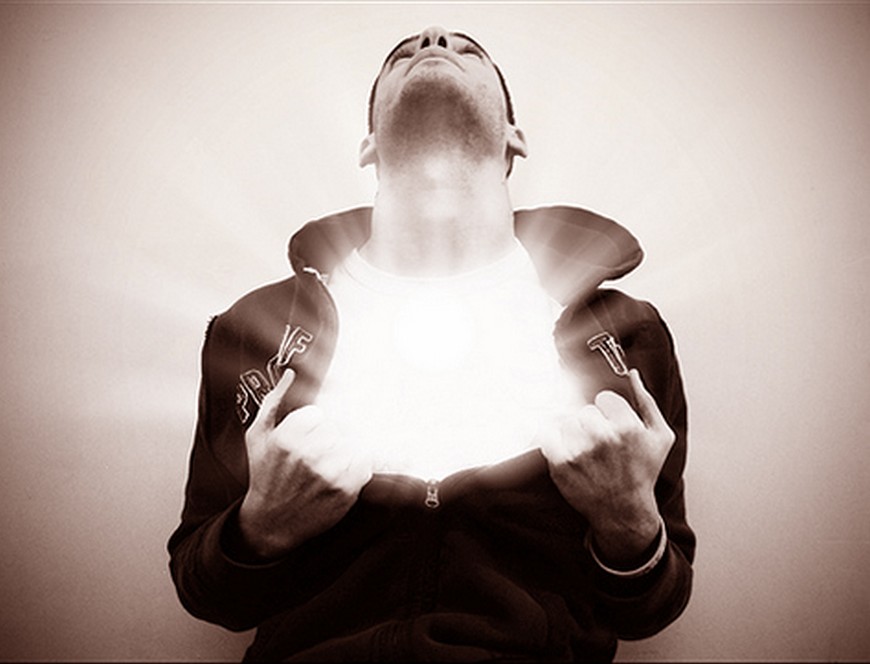
What lies in the depths of the human soul? And what is the soul, in general? For some, it is an energetic essence that separates from the body at the moment of death. For others, it is a collection of psychological factors and reactions, the human psyche (hence the term “mental illness” or “psychic disorder”). For others still, it is the mind, feelings, and qualities of a person — that which makes them a unique, inimitable individual. And for some, it is a certain “Divine spark”, a particle of light around which everything else that constitutes a person is formed. Basically, all of these perspectives are correct. The soul is all of the above, taken together. It is just that, depending on the situation, one or another of its aspects becomes the focus. The fourth option — the spark of light — stands somewhat apart from the rest, although it is closely connected to them. Why apart? Because it is something deeper than the soul in all other definitions. It is what can be called the foundation of the soul.
The Teaching says that this spark is a particle of the Spirit, a particle of the Creator’s soul, present in every being and even in every object. In sentient beings, it manifests in a special way: it reveals active reason. That is why humans and other sentient beings possess the ability to actively learn, to be conscious, and to make moral choices — through which the Spirit is perfected. This has been discussed more than once and will be again. For now, another aspect of what we know about the Spirit is of interest.
First, let us state the following: the Spirit within a person is something greater than the person themselves. After all, it is a particle of the Creator’s soul. And it was such even when it had just emerged from the world of the Spirit and had not yet lived a single life in a material body. It gained an energetic body, then a material body, and then began living lives, developing and accumulating qualities, experiences, psychological traits, intellectual baggage, and so on. Thus, around the particle of the Spirit, a human personality began to “form”. Essentially, it began to “form” around the personality of the Creator, for the Spirit is his soul. What does this mean? First, that every person is the Creator, embodied in a specific human personality and adopting its physical and psychological appearance. Second, that beneath the shell of the human personality, which carries information about the individual, one can find the personality of the Creator, carrying information about him. Thus, two aspects of the human personality can be conditionally distinguished: there is the person as a person, and there is the person as the Creator. The former manifests through consciousness and the subconscious. The latter…
The Teaching uses a specific term to denote how the latter manifests: spirit-consciousness. This is what lies in the depths of the soul, on a level deeper than the subconscious. The subconscious also holds many mysteries and surprises. For instance, the subconscious contains information not only about the current life but also about past lives, recorded experiences, psychological traits and reactions, and so on. This alone can revolutionise and transform disciplines like psychology. However, the subconscious always pertains to a specific human personality. Spirit-consciousness, on the other hand, represents an even deeper and more global level — the level of the Creator’s personality, encompassing the entire Universe.
What does spirit-consciousness contain? Or, put differently, what can a person access through it?
First, it is the sense and perception of unity. Even when conditionally divided into particles, the Spirit remains unified. This means that every person can feel their unity with all other people, with all beings, and with everything that exists in the Universe. This is truly a great and priceless feeling, capable of completely transforming a person for the better. Moreover, through the Spirit, like through a universal network, everyone exchanges the good qualities they develop within themselves.
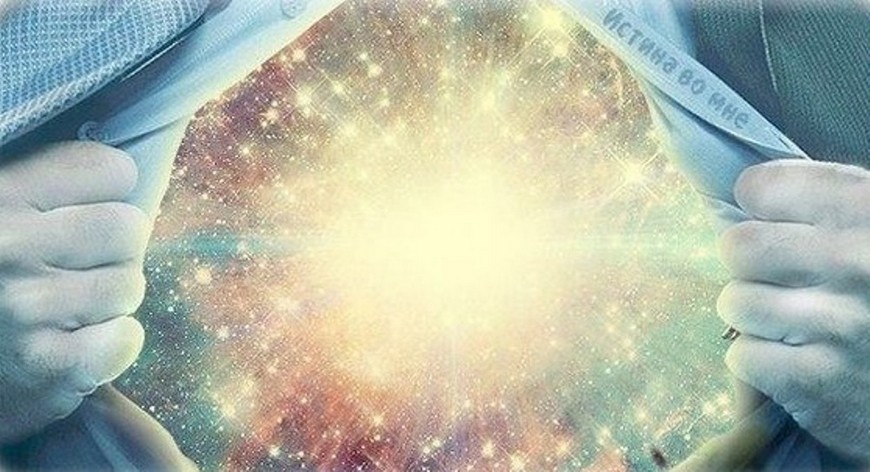
Since the Spirit permeates everything, it contains information about everything. It is, so to speak, a universal, exhaustive database about the Universe — its structure, history, and current events. The Spirit holds a detailed portrait of reality; within it, Truth is recorded. And by virtue of unity, this information belongs to every particle to the same extent as it belongs to the whole. In other words, each person, through their spirit-consciousness, knows the Truth to the same extent as the entire Universe — that is, fully. However, this knowledge is buried very deeply and must be revealed within oneself, approached gradually. This is what each of us does throughout the chain of reincarnations, simultaneously perfecting our particle of the Spirit. It is a grave mistake to think that one can easily draw knowledge from within, that there are no problems in distinguishing Truth from falsehood, or that one can intuitively and infallibly identify elements of Truth among various opinions and teachings. Many today believe they are capable of this. They are the ones generating the deepest spiritual chaos, fabricating countless versions of “Truth” based on subjective feelings — mostly absurd and always contradictory.
Next, as has also been discussed, universal human morality is manifested through spirit-consciousness. Throughout history and among all peoples, ideas about good and evil, moral and immoral, have largely coincided. Why? Because these are the Creator’s own ideas. Along with his positive qualities contained in the Spirit, these concepts are shared with all people, serving as moral templates by which individuals subconsciously calibrate their own sense of morality. Though this template — this scale of moral values — is hidden deeply, it operates and functions, subtly and spontaneously generating universal human morality. From here also stem concepts like conscience, which can be seen as a moral indicator helping to determine what is good and just.
Furthermore, from the Spirit, through spirit-consciousness, we receive willpower. Will is the ability to be firm, unshakable, and to internally resist pressure — whether from one’s own weaknesses, other people, or circumstances. They say one man is not a warrior. That is false. One person can stand against all and triumph if their willpower is sufficiently strong. They may be tortured or even killed but cannot be broken — and that is their victory. Many avoid using their willpower or even deny its existence, finding it more convenient and safer to consider themselves weak. But those who harness their will perform miracles of endurance and courage. Because their will is the will of the Creator. Willpower available to a person is as vast as the Universe. Its source is truly inexhaustible. And who can break you if your will draws from such a source?
Finally, there is the Creator’s memory. Before becoming the Universe, the Creator was self-aware, remembered his life, and possessed immense knowledge of his world. After his new transformation, all this will return to him, meaning it still exists now, recorded in the Spirit. Therefore, it is present in every person. Deep within spirit-consciousness, a person knows what the Creator looked like before becoming the Universe, what his name was, and what his life was like. But this knowledge is hidden deeper than anything else. As long as a person remains human, they cannot access these layers of spirit-consciousness. Perhaps only slightly, and even then, only theoretically, through vague images and sensations at high levels of spiritual progress or under unique circumstances. But even then, it is uncertain whether these are true memories or mere illusions. The human mind cannot comprehend or process such an unimaginably vast volume of knowledge. These capabilities begin to unfold only after the particle of the Spirit enters the world of the Spirit. And they will fully unfold for the Creator himself after his transformation.
Thus, five essential aspects: the sense of unity, knowledge of Truth, basic morality, inexhaustible willpower, and the Creator’s memory. All these belong to the Creator’s personality, are contained in the Spirit, and come to us through spirit-consciousness — that which is greater in us than ourselves. This is not an exhaustive list but gives an idea of the incredible treasures and mysteries hidden in the depths of the human soul, in our spirit-consciousness. Put simply: the Creator himself is hidden within our spirit-consciousness.
As humanity develops spiritually, people will increasingly reveal spirit-consciousness and learn to meaningfully use its gifts. The Creator will manifest more within humans. To accelerate this, one must at least be aware of spirit-consciousness and understand what it contains. Someday this will be common knowledge. A scientific discipline will emerge to study it. For now, humanity is taking its first conscious steps towards understanding spirit-consciousness, its importance, and how to draw from its treasures. The work ahead is vast but exciting and inspiring. What could be better for those who are neither lazy nor afraid of challenges?
© Atarkhat, 2017