
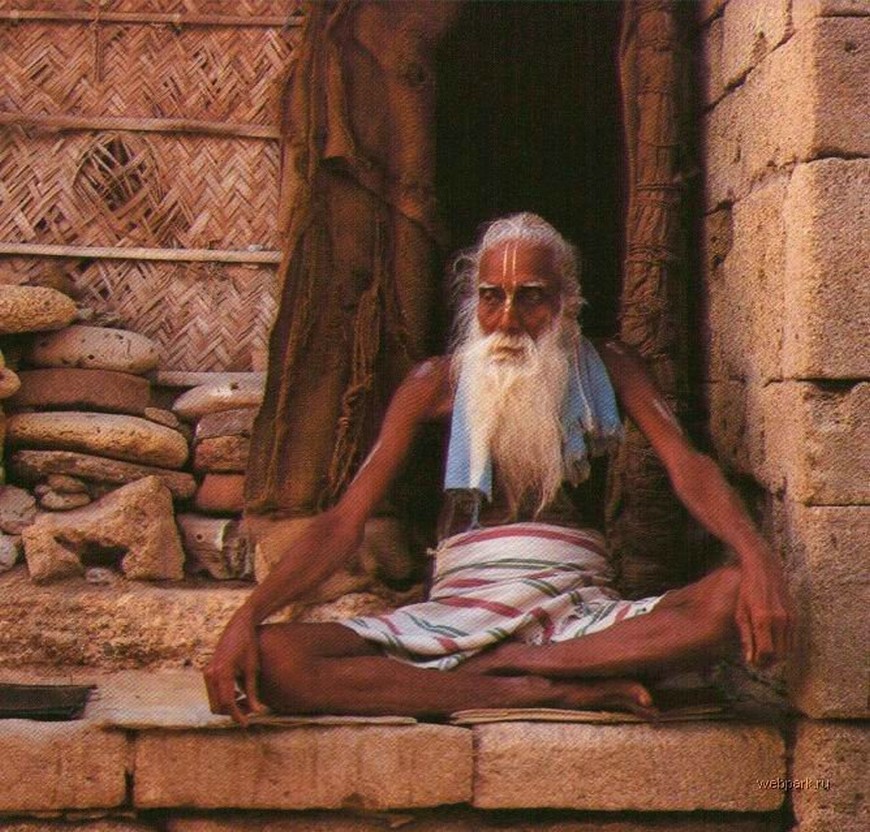
Asceticism: An Unnecessary Extremity

Asceticism is an important element of many spiritual traditions. It is considered important because, according to the adherents of these traditions, it serves as an indicator of one’s spiritual progress. It can take various forms, but ultimately, it always comes down to the same thing.
Asceticism is typically understood as the ability to renounce worldly pleasures — those things that hinder a complete immersion in the spiritual realm of life. The definition of “worldly pleasures” can be quite flexible. For some, it means renouncing excess, which often turns into vices, such as luxury, gluttony, debauchery, etc. However, this form of self-restraint is unlikely to be called asceticism; but for those who have become accustomed to excess as normal, it indeed looks like asceticism. For those who see the concept of normality in a more balanced way, asceticism means renouncing a part — sometimes a significant part — of what is necessary, reducing their needs for clothes, food, comfort, etc. This, too, cannot be strictly defined as asceticism. It is more likely to be called modesty — sometimes excessive, but still, modesty. Moreover, the boundaries of necessity are quite indeterminate. What one person needs or desires greatly, another can easily do without. Therefore, what seems like self-restraint to one person, requiring purposeful and determined effort, may be perceived by another as normal, without any sense of deprivation. Only more extreme forms of self-restraint, where a person voluntarily subjects themselves to significant deprivation and renounces even what is necessary and normal, are typically considered to be true asceticism.
This form of asceticism is often regarded as a clear indicator of a person’s level of spirituality. The approach is based on the opposition between the spiritual and the worldly. An immersion in spirituality, in its traditionally religious understanding, does not easily reconcile with bodily and material interests — even if these interests are seen as no more than the trivialities of everyday life. First, these material interests take away time, attention, and energy, diverting a person’s sense of responsibility. Second, ensuring them often requires making unethical decisions and engaging in immoral actions, ranging from petty selfishness to great cruelty, fostering greed, envy, and aggression. Third, the habit of material pleasures relaxes a person, making them unable to cope with problems and hardships — problems and hardships that are often a part of spiritual practice. Simply put, focusing on the material side of life — social relationships and family, in such a context — distracts a person from spiritual tasks, diverts them from morality, weakens them, and provides fertile ground for vices to grow. In short, it makes them worse. This is all quite obvious, and therefore, in religions where the spiritual side of life is sharply contrasted with the material, asceticism became a means of detaching from the material world and focusing on the spiritual.
Additionally, asceticism serves as a form of training, developing many positive qualities: modesty, unpretentiousness, the ability to endure hardships, patience, willpower, self-control, and the ability to stay calm, etc. These are indeed valuable qualities, necessary always, regardless of religious tradition.
However, it is also true that asceticism, when taken to its extreme forms, easily turns into self-torture, a process aptly described as mortification of the flesh. This can lead to real acts of cruelty against oneself, sometimes bordering on sadism. I’ll briefly list some of its varieties. Some people starve themselves, often reducing themselves to living skeletons, too weak to stand. They beat and whip themselves, sometimes combining this with cutting their skin and flesh. Some burden themselves with weights that hinder movement and distort the body. They burn, pierce, and constrict their flesh with ropes, chains, or wire, causing the flesh to decay. Some even remove organs — eyes, genitals, etc. — supposedly to facilitate complete immersion in spiritual practice. This is far from a complete list of practices in this area. Truly, a passionate person knows no restraint or measure, not even in self-inflicted suffering.
Various forms of asceticism — ranging from simple withdrawal from society to monstrous self-mutilation — share the same goals: detachment from the material world, concentration on the spiritual, development of special qualities (often combined with punishing oneself for real or imagined sins), seeking favor from higher powers, and striving to deserve posthumous rewards. This is a general summary of the ideas presented above, without delving into specific cases.
The TUT holds a different view on all of this. And the point here is not even that it is not a religion — because in fact, it assigns great importance to the spiritual side of life. The issue is that the pursuit of spirituality should not devolve into something grotesque and horrifying, and the spiritual side of life can actually be harmonised with the material.
In reality, one should not hinder the other. But why does it always hinder? Why is it so difficult to combine them? As a rule, it’s because such a possibility is not even considered. The spiritual and the material are typically seen as fundamentally different phenomena, two separate worlds that can hardly coexist. If one imagines human life as a puzzle to be assembled, it turns out that pieces from two different puzzles have been mixed in. Each puzzle forms a separate picture, but it is impossible to create one unified picture from them. But is this really the case? It is, if the pieces come from two different pictures. But it is not, if it is one picture that includes everything. The puzzle you create is the one you will assemble. And who defines the picture that becomes the puzzle? This is where the problem lies. If the picture corresponds to reality, then it will fit together properly. The only true creator of such a picture can be Nature. When a person takes on the right to create reality, and does so based solely on their own tastes and whims, the picture becomes distorted, based on misconceptions, and the puzzle will either not fit together or break into several incompatible pictures.
A person is designed such that both material and spiritual aspects fit naturally within them. In reality, they do not oppose each other but complement one another harmoniously. In order for this to work, one must see their common foundation. This common foundation is the purpose of human life, their place in Nature. It includes both the spiritual and the material aspects. The first, among other things, serves as a guide for the principles upon which the second should be built. It should be built consciously, purposefully, and diligently. Then, the material side of life will not interfere with the spiritual but will serve as its support. Instead of a destructive conflict, we will see a creative and life-affirming symbiosis. If, indeed, one can call symbiosis the mutually necessary coexistence of two sides of one coin.
If the spiritual side of life is properly understood and properly organised, then the material side will also be organised properly. It will not be perceived as hostile, as an obstacle, and there will be no need to run away from it. And if we think about it — why do ascetics run away? From what do they renounce? Is it normal to renounce this? People are given the ability to love, the great happiness — and at the same time the great responsibility — to continue the human race through children. Is it spiritually correct to renounce family? We are given the ability to empathise, to help others, to create, to change the world for the better. Is it spiritually correct to run away from society and isolate ourselves from the world? We are given the organs of perception, intellect, and emotions. Is it spiritually correct to suppress them, blindfold them, and discard them like useless junk? We are given a beautiful, skillful, and strong body. Is it spiritually correct to needlessly exhaust, torment, and cripple it? Does all of this seem truly spiritual and correct upon reflection? Probably not. Something is clearly wrong here. And it’s not too hard to figure out what it is. The problem is that many people simply do not understand how to properly use all the wonderful gifts, abilities, and opportunities mentioned above. Their worldview has become marred by fatal mistakes, and what is good, useful, and necessary is perceived as harmful, something that hinders the right way of living and needs to be gotten rid of.
According to the Teaching, asceticism as a spiritual practice does not justify itself. Moreover, it often proves to be an obstacle on the spiritual path because it does not help to follow it but instead hinders it, causing one to lose a sense of measure and fall into extremes. Extremes that are just as harmful as excessive immersion in the material world. The material should not degenerate into egoism, greed, and lust; the spiritual should not degenerate into disregard for the great gifts of Nature. As for seeking the favour of higher powers, this is also a mistake. In reality, human self-inflicted suffering is unnecessary. Perhaps, only to other people.
Sometimes, it is necessary to limit oneself in something essential. In some cases, simply because it is not possible to obtain what is necessary, or not in an honest way; in others, because circumstances require some sacrifice. But this is not the same as asceticism. Sometimes, one can limit oneself in something necessary with the goal of learning to be less dependent on life’s conditions and one’s needs and to cultivate the qualities mentioned earlier — modesty, unpretentiousness, the ability to endure hardships, patience, willpower, endurance, and so on. From this perspective, reasonable self-restraint is indeed useful — especially considering that limiting one’s material needs will reduce the exploitation of our planet’s nature and reduce greed, envy, and hostility in society. But it is reasonable self-restraint, not asceticism. Extremes should not be treated with extremes. There is no point in driving a wedge with a wedge, as both wedges are bad, and this will lead to nothing but new problems. Everything in moderation. In this case, moderation lies between indulgence and asceticism. At the point where the spiritual and material merge, where their common foundation becomes clear, where their shared origin becomes visible. From the perspective of the Teaching, this point is very clear.
© Atarkhat, 2017