
The Final Revelation: A Backstory

A Brief Backstory.
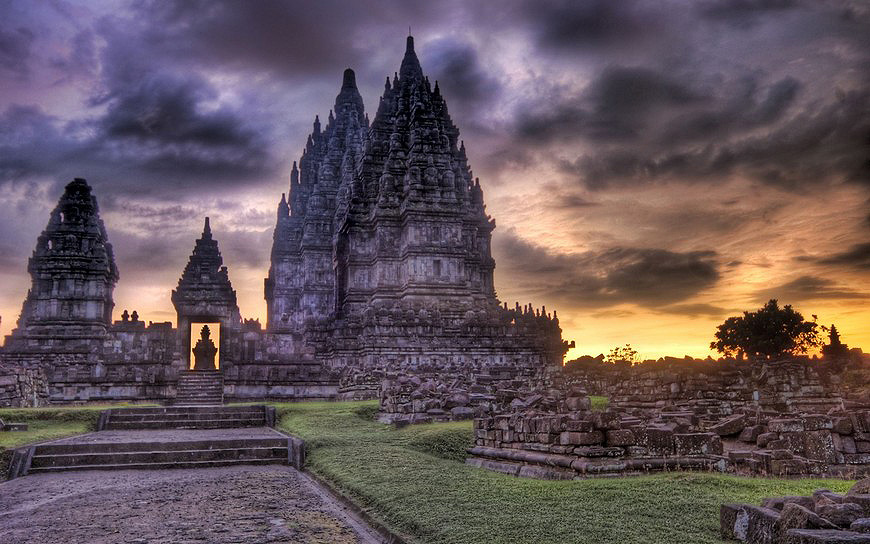
The beginning of my path in the Teaching was laid long ago. Long before I heard the first words of revelation. And even long before my current birth. It began about 2,500 years ago, in India. In that life, I was a kshatriya from a good family and bore the name Ananda.
One day Ananda — let us call him that for now — heard a voice. It was the voice of a man named Sher-Ander, who, long before that, in one of his past lives, had belonged to the Teaching. While in the second world, awaiting his next birth and wishing to share his knowledge, he sought someone among the living who could hear him. That person turned out to be Ananda. Upon hearing the voice in his head, Ananda at first thought that one of the gods was speaking to him. Withdrawing into the forest for several days, he tried to open his consciousness to hear the voice more clearly. Soon, he already knew who was speaking to him, and regularly withdrew to the forest to listen, without distraction, to the guidance of his unseen Teacher. Time passed, and everything began to change for him. A new world opened before him, utterly unlike the one he had known since childhood. Gradually, he began to change as well. His views, principles became different — and with them, his lifestyle and actions. The time came when these changes became obvious to those around him. His family began protesting against his behavior, which they saw as inappropriate; relatives — and not only they — tried to bring him to order. Among those most troubled by Ananda’s transformation was his cousin. He said to Ananda: “Are you sick or have you been struck by the club of one of the demons? Come: I will take you to a man of holy life; perhaps he will deliver you from this affliction” (Sebast, 17–18). In response, Ananda took him to the forest, to the place where he usually listened to the Teacher’s voice. In the forest, his cousin thought Ananda meant to kill him and drew his sword, ready to defend himself. But Ananda calmed him and shared his secret. Though not immediately, the cousin believed him. Once convinced, he asked to be taught as well. He also offered his support in resisting public condemnation — for it is easier to face pressure together than alone. Ananda agreed.
For some time he continued learning and relaying what he learned to his cousin. But soon he began to have thoughts of using the knowledge he had gained for his own elevation. Succumbing to temptation, he began living a double life: continuing to study, but outwardly renouncing his principles, pretending to have repented and returned to his former faith and customs. This pleased those around him. The Teacher, however, tried to admonish him, pointing out the unacceptability of such behavior and warning him against pride and hypocrisy. But Ananda could no longer turn back; and when he realised that his plans were incompatible with discipleship, he stopped listening to the Teacher’s voice. To his cousin, who still wished to partake in the knowledge, he declared that his discipleship was over.
Time passed, and Ananda managed to achieve much and rise above his former status. But he also gained enemies. One day, already an old man, he rode alone, without servants, to a nearby village. Along the way, he was ambushed and shot in the side with an arrow. Falling from his horse, he lay for several hours; then peasants found him and brought him home. Ananda died slowly and painfully, remaining fully conscious, thinking about the mistake he had made in straying from the path, horrified by his deeds and full of remorse.
…I experience strange sensations when I recall those events and myself in the image of the Indian Ananda. It feels like memories of another person’s life; yet that other person was me. It’s somewhat like remembering your youth. You recall what you thought, felt, and did when you were sixteen; and it feels as though it was another person, another personality — so different is he from your present self. And if you remember yourself at seven and at thirty, you’ll see two more people different from who you are now. Yet all of them — are you. You are the sum of the personalities that succeeded one another throughout your life. Your current self is the latest version of you, the present result of layered past versions. Past lives are recalled in much the same way. And you begin to perceive yourself as a transformed personality of that former person. Especially since that is exactly what you are.
You have unusual experiences when you recall things you did not do in this life, but did in a previous one. For example, I have never ridden a horse. But I remember the feeling of galloping. I have never killed a person. But I remember killing in a past life. I have not done it — yet I have, and I know how a weapon cuts into living flesh, and I remember the feel of a sword and an axe handle in my palm, and what the hand feels at the moment of a strike. It is very strange to feel that you have never taken a human life, and your conscience is clear in that regard — and at the same time to remember and know that you have. You are not guilty — yet you are. And the most important thing is that both are true. This applies to both negative and positive experiences. You rejoice and grieve over things that did not happen in your current life — but rejoice and grieve as if they had. Such duality of perception not only allows you to see many things from an unusual perspective but also grants a very unique kind of experience. You’ve never been in hand-to-hand combat — yet you know what it’s like. You’ve never felt an arrow pierce your body — yet you know the sensation. You’ve never lain for two days in agony, feeling life leave you — yet you know what it’s like. And there are many such moments of experience. It’s as if your life has become more capacious and absorbed more experience than it actually contains — like a vessel that, in some miraculous way, holds twice as much as it should.
Among other things, this has affected my perception of homeland. I consider myself a citizen of the world, and narrow national or state patriotism is alien to me. I regard every nation and every country as my own. But there is one country for which I feel special affection. And it is not Belarus, where I was born and live. I feel that my true homeland is India. What I feel toward it could probably be called nostalgia. I miss it. I am drawn to it; I imagine myself a wanderer who long ago left his native land but dreams of returning. I love the nature of India, its culture, its people. There is where I began, there lie the origins of who I am now. Within me, Indian Ananda and Belarusian Viktor have merged. Each of them has his own homeland. But the man named Atarkhat, who arose from their fusion, is drawn to India, as if returning home after long travels.
Over the Abyss
When Ananda died — although by now, perhaps I should say I — he passed through an unusual afterlife. Typically, immediately after death, a person finds themselves in their personal hell — a temporary, tormenting state that ends after a certain period, which is different for everyone. Some fall into an illusion that can hold them captive for many years. Others fall into a coma-like state, without thought or sensation, which may also last a very long time. But after the illusion or “coma” a personal hell is inevitable. As for me, I ended up in the Abyss, which took its place.
Explaining what the Abyss is, is not so simple. It can be defined as a region of maximally rarefied energy — something like an energy vacuum (though not quite a vacuum) in the energetic Universe. I wouldn’t be wrong to say that the Abyss is the most terrifying place in the second world. Energetic beings who have the misfortune to enter its domain experience torment akin to intense pain and suffocation; the Abyss literally sucks them dry and kills them, consuming their energy. Although there are those who are immune to this. Among them are the gods (higher elementals), including the Dragon, and the sentient beings, since their energetic bodies cannot be destroyed. The gods, by and large, have no business in the Abyss; only for the Dragon is it a kind of lair, from which he casts the nets of his influence across the Universe. As for the sentient beings — they cannot enter it at all, at least not of their own will. Moreover, even if they’re not at risk of destruction, the torment inflicted by the Abyss still remains. I had the chance to learn this firsthand.
Aside from me, no other human had ever been in the Abyss. Nor has one been since. I ended up there because my apostasy was unprecedented. Of course, many people stray from the spiritual path they once chose. But that only means their choice was not firm, and the chosen path never truly became theirs. In simpler terms, if you left your path, then it never was truly your path. However, it is possible to reach such a deep degree of awareness of Truth and of one’s spiritual path that you become inseparably one with it, and apostasy becomes impossible. Ananda reached that level of awareness and fusion with the path pointed out by Sher-Ander. But he strayed from it — he committed apostasy. That is, in fact, the impossible occurred. Nothing like it had ever happened before, and nothing like it will happen again. Why, then, did it happen at that time?
The reason was that such a necessity had ripened. By then, humanity had, for many millennia, been unable to escape the labyrinth of its delusions. It had received no less than 26 revelations, intended to help it find the true path, and much had been done by earlier prophets and Teachers — but a decisive breakthrough had never been achieved. And it had become clear — clear to Nature as the sum of the principles and laws acting in the Cosmos — that a critical moment was coming in human life. A moment when humanity would either turn toward true knowledge or descend into gradual decline or self-destruction. A final revelation was needed — a special one, intended not for a narrow circle of initiates like those before, but for all of humanity. And to receive such a revelation, a special prophet was required. So Nature itself arranged for one who had realised the Truth to commit an unprecedented apostasy, and as a result, find himself in the Abyss. What was impossible for a person in principle turned out to be possible for Nature, given the necessity for the evolution of humanity. And the Abyss gave me a unique experience no previous prophet had ever had.
You could say that, in that situation, I served as an instrument of evolution. Nature needed someone who would pass through the Abyss — and it nudged me toward apostasy, arranging for certain processes and reactions within me to behave unlike they normally would. So what does that mean? That I am not to blame for my apostasy? Both yes and no. I was given the opportunity to fall — and was even pushed toward it. However, the right to free choice is the right to free choice. I could have chosen not to step through the gaping gates of the Abyss. But I did. Why? Because Nature is not separate from man. Each of us is a particle of it. And at that moment, I, as a person, had the right to choose — but as a particle of Nature, feeling — even subconsciously — its laws and needs, I knew what was required of me and did it. In other words, it was not the act of a man as an autonomous being deciding his personal fate, but the act of a man as Nature itself, understanding and solving far more universal tasks. Therefore, on one hand, I am guilty, because I made my choice and committed apostasy. On the other hand, the choice was made by something greater than myself — something beyond an individual personality. And it was precisely the choice that was needed at that time. Do I regret it? Yes — just as I regret any of my mistakes. But since that mistake was necessary at that moment, I simply accept everything as it is. What happened was what had to happen. However, I only thought deeply about this and understood it much later.
Back then, in the Abyss, I wasn’t capable of analysing what had happened. My entire being was filled with indescribable pain. And “indescribable” is no figure of speech here. The torment, when the Abyss tears, twists, and sucks you dry — and you cannot die, nor even lose consciousness — is truly beyond words. It is also impossible to recall in full. A mortal human body cannot endure such pain; even a single vivid memory of it would have killed me. So what I can now recall of the Abyss is only a faint echo of that pain — a vastly muted reverberation, a mere sliver of those sensations. But even that sliver is enough. With any attempt to concentrate on those memories, I begin to feel what must be something akin to what a person feels when burning alive — and I clearly understand that going deeper into those memories would be deadly for the mind and body. Such is the distant echo of the Abyss. I spent about 1,000 years in it. Trying to describe it in detail is pointless — and likely beyond my ability. I will only say that once, I felt the presence of the Dragon beside me. Not exactly him — not in energetic flesh, so to speak. It was rather the sense of his gaze, when for a certain moment he focused his attention on me. Describing what that felt like is also nearly impossible. But the gaze was not hostile. More like… curious.
When I emerged from the Abyss — or more accurately, was simply expelled from it after the allotted time — I took a long time to recover. My guardian helped me with this, having waited all that time for my release. It was he who explained to me what I’ve now laid out above — that is, why I ended up in the Abyss and why it was necessary. And then he placed a new choice before me. Now, I had to decide whether to step onto the path of a new duty, which began at the very edge of the Abyss.
Falling into the Galaxy
And so, I was faced with a choice: to continue the ordinary path or to accept the duty for which the Abyss had been endured. However, this choice was purely formal. Having gone through what I had, having learnt what I had learnt, and having understood what I had understood, I could make no other choice but in favor of duty. I knew this — and the guardian who offered me the choice also knew what my answer would be. But the choice still had to be offered — because it was a matter of free will, and I had to be given the opportunity to refuse.
When I told the guardian my decision, he led me with him, and we found ourselves in a place resembling a wide mountain valley, flooded with bright, yet soft and non-blinding light, which my energetic body perceived somewhat like how a physical body feels the touch of fine warm silk. Besides us, there were several other people and beings. In one of them, I recognised my former Teacher, Sher-Ander — recognised him even though I had never seen him in person before. He approached and stood beside me and the guardian. And then, before us appeared a very tall man, whose appearance and clothing, I would now say, resembled that of an ancient Egyptian, with skin of an unusual violet-copper hue. No light radiated from him — yet there was a distinct sense that he glowed. I could feel it with my whole being. And I knew that this was the God of Wisdom. Of course, only in one of his manifestations. Elementals of such scale, who permeate the entire energetic Universe and who lack a definite form, yet wish to appear before someone, shape a part of their essence into a form suitable for that encounter. In this case, the God of Wisdom appeared in the same form in which he had once appeared to my predecessor — the prophet now known as Hermes Trismegistus. When he appeared before us, all present, human and non-human, bowed in reverence. I bowed as well, filled with immense awe. Then the guardian repeated to me what he had already said earlier about duty and choice and asked me to declare my decision. I did so. Then the God of Wisdom smiled, raised his hand in a greeting — and at the same time calming — gesture, and vanished. And instantly, I found myself in another place, with the guardian still by my side.
The account of what I saw and experienced in the second world could fill an entire book; and the memories continue to return, constantly growing. For fifteen hundred years I awaited my time — the moment when I would begin to fulfill my duty. Throughout that time, I traveled the world of energy, learnt, and met others. I won’t even try to recount it all here, even in brief. I’ll only say a few words.
As usually happens with those who transition to the second world, I spent much time speaking with my guardian. Despite having already learnt a lot about the afterlife during my lifetime from Sher-Ander, the help of the guardian was still invaluable. I also saw and spoke with Sher-Ander himself. It was an amazing experience: to see before me the Teacher who had once been just a disembodied voice, and to speak with him face to face. We shared similar feelings, in a way. I regretted my mistake — that is, my apostasy — though I now understood the deeper causes of those events. He regretted his mistake — that is, having chosen to teach a future apostate — though he too now understood the context and realised that his passionate desire back then to find a disciple among those living in the material world had also arisen for a reason. It all fit into a larger picture of preparing what the world and humanity needed — and therefore what had to happen.
Unfortunately, some elements of that picture I have still not recalled or understood. For example, Sher-Ander had to wait, without reincarnating, for a thousand years until my release from the Abyss, then wait until I regained a physical body, and then wait for the beginning of the revelation — only after which he was once again able to continue his path through new incarnations. Why was it like this? I don’t know. Although perhaps I do — but I don’t remember. Just as I don’t remember another thing important to me. When I was offered to accept my duty, I was warned that in doing so, I would forever lose the ability to reincarnate. I already knew that each person reincarnates until, through knowledge and growth, they rise to a level of spiritual development where rebirth is no longer necessary. Then they remain in the world of energy for a while, finishing their journey, and afterward transition to the world of Spirit. As for me, after my final birth and death, I was to continue and complete my path only in the world of energy. Moreover, I was to remain there without the possibility of entering the world of Spirit — until all of humanity has completed its path. That is, until the last person dies in the material world — and afterward, until the last person passes from the world of energy into the world of Spirit. Why? Due to what principles must it be this way? Again, I don’t remember. But at that moment, I likely did. And I agreed, accepted it as necessary. I accepted it knowing how hard it would be for me to continue my path — many thousands of years without reincarnation, watching the rise and gradual fading of the human race, and in the end remaining completely alone, the last human in two worlds. And so it will be. But even now, the thought that I will never return to this world — at least in the flesh — is unbearably painful. It is beautiful, and I love it. I have not yet died, have not yet lost it forever — and already I ache with longing for it. For the earth and sky, for water and greenery, for breath and human touch. Even for pain — which is so abundant here, but is also part of life. The world of energy is infinitely greater and more diverse than our planet; the freedom of movement there is also incomparably broader; it holds its own joys and sorrows. It contains much that the material world cannot offer. But it lacks what only the material world can give — and what I will never have again. This loss feels heavier than the inevitability of death itself.
I also saw the one who had been my cousin in my Indian life. Having once touched the Teaching, he never wished to leave the path — and waited in the second world, and found me after I was freed from the Abyss. We met and spoke many times. I felt guilt toward him and was glad for the chance to give him what I had once withheld. Later, he departed into a new incarnation; and when he returned again to the world of energy, we resumed our conversations.
I also met others from the Eternal People. And not only people. Being a part of them myself, I had access to their stronghold, located near Earth. It is a human stronghold, but often hosts guests from other strongholds of the Eternal People located near other planets. Accordingly, residents of our stronghold can also visit theirs. I’ve had the chance to do so many times — since, in the second world, there are no language barriers, and the skills of near-instant travel across vast distances open immense opportunities. These opportunities are hard to imagine. If one’s abilities and level of preparation permit, it is possible to travel not only beyond the Solar System, but beyond the galaxy, and even farther. Theoretically, one could reach the edge of the Universe and, figuratively speaking, knock on its shell from the inside. However, I have never ventured that far.
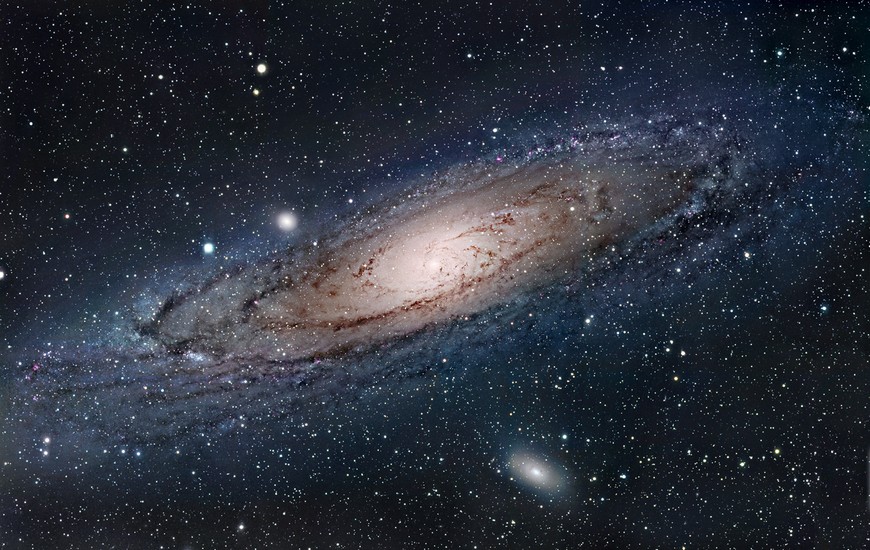
It’s not surprising that such experiences and this kind of journey sometimes leave a distinct mark on the psyche. For instance, for as long as I can remember, I could never calmly look at photographs of galaxies. If I stared at such an image even for a couple of seconds, I would start to feel dizzy, as if falling into it; it felt like it was pulling me in. I wouldn’t say it was terrifying — but it was unsettling, because it was so inexplicable. And only relatively recently did I remember the origin of that strange effect. It turns out, during my time in the world of energy, I loved stepping beyond the bounds of our galaxy to gaze upon it from the outside. Around it stretched the cosmic expanse, scattered with shining lights. But these weren’t stars — they were other galaxies. The memory of this takes my breath away. Even now, I look forward to once again enjoying that incredible sight. And I remember that the moment I let go of the willpower anchoring me in place, I would begin to fall into the galaxy. It pulled me like a magnet. This happened because Earth was within it — the planet of which I am a part. The flesh of every person is the matter of their home planet, and their energetic body — a fragment of Earth’s energetic body, which draws its temporarily separated particle back in, seeking to restore lost unity. And I, surrendering to that pull, would plunge into the galaxy toward Earth, like a fish leaping from water, only to return again to its native element. A subconscious memory of this is what caused my strange reaction to photographs of galaxies.
Within every person is a subconscious memory of not only past lives, but also of their time in the world of energy. For many, this manifests in their sensations and behavior. Perhaps it is this — and not mental illness — that explains the peculiarities seen in some people, which sometimes puzzle even themselves.
In the future, such matters will fall under the purview of psychology as a science. For now, it doesn’t account for the psychological effects of past lives or the afterlife, and thus is practically incapable of properly interpreting many phenomena of the human psyche. After all, a person is far more complex than a personality that exists only here and now — and carries within them much more experience than just that of a single life, into which psychology tries to squeeze them. Consequently, it cannot fully understand or explain the human being. But that is not its fault. Modern psychology simply lacks the means to obtain such information — about experiences in past lives and the afterlife. Hypnosis? Hardly. It’s too unreliable, too speculative. Hypnosis itself is still insufficiently understood and researched — so the reliability of the information it yields is automatically in question. How can such knowledge be obtained scientifically and with guaranteed accuracy? I have no idea. Psychologists and psychoanalysts of the future will wrestle with that problem. And I will watch with interest from the second world to see how they succeed.
Into the Final Life
Fifteen hundred years is a long time. Long even for the world of energy, where the passage of time is perceived somewhat differently than here. Usually, a person spends a few hundred years in the second world (on average, about 500). But this stay doesn’t feel all that long or burdensome. You don’t see the change of seasons and don’t age, freer and faster movement grants tremendous possibilities, new experiences pour forth abundantly, the discovery of many new things about the surrounding world, its inhabitants, and yourself keeps boredom at bay and constantly reveals new perspectives. Centuries there pass as decades do here — so it doesn’t seem overly long. And when the need for a new birth arises, it often comes as unexpected news. Yet still, fifteen centuries is a great deal. I felt it very acutely. First of all… no: second of all, because the upcoming birth was to be my last. It’s always hard — and for me, even tormenting, that’s just my nature — to wait for something very good while knowing it will be the last time. You long for it, yet at the same time, you try to postpone the moment, so as not to lose what you hope and wait for. Because afterward, it will never come again, and the sense of loss will flood you. That’s exactly how it was for me. I wanted my final birth to be delayed as long as possible; but the wait itself was agonising, as it was the wait for an irretrievable loss. You can’t breathe enough before death… And how can I express what I felt? I can’t find the words.
Well, first of all — a rare case where “first of all” follows “second of all” — it was painful to realise that something was brewing in the material world, something that would eventually necessitate the revelation I was preparing for. It was hard to see the course of events bending in an unfavorable direction, and crisis seeming all but inevitable. I often visited the Earth, observing human life at length and tracking the progression of events. To say that it was fascinating is to say nothing at all. But it wasn’t an entertaining attraction. Rather, it was an unending drama, often turning into tragedy. And always there was a taste of bitterness mixed in. Because I already had a general sense of where it was all heading.
When I was released from the Abyss, the Earth was in the early Middle Ages. That’s when I began to observe the human world, and that’s when I received the first vivid impressions from it — compelling and often bitter. The memories of that time clarified something else in my life. I’ve always had a passion for history, I love it; besides, I need it for my work. And I was always especially drawn to and captivated by the Middle Ages — its life, its culture, literature, and people. Now I understand why: that era, for me, is in a sense a first love. It was its life that I observed for a good thousand years; its songs that I listened to; its people I empathised with. All of that left an indelible imprint on my soul. And toward the end of that era, my attention was almost entirely drawn to Japan. That too left its mark on my soul. I hold Japan dear — not the modern, urbanised, high-tech Japan steeped in pro-Western pop culture, but the old Japan of the samurai. The kind seen in Jidaigeki films. But films are just films; I had the chance to see that life and those people firsthand. It was far more fascinating, dramatic, and terrifying.
One of the most terrifying — perhaps only the Abyss was worse — moments of my time in the world of energy was also connected to Japan. But this happened much later, shortly before my birth. I’m speaking of the bombings of Hiroshima and Nagasaki. The atomic bomb’s detonation echoed in the world of energy with a monstrous surge of pain, horror, and grief. It was a shockwave of human suffering and Nature’s own agony, radiating from the epicenter across the planet and into the cosmos. At that moment, I was near Earth, and my energetic body felt it as if a wave of fire or burning poison had passed through it, causing a convulsive spasm of pain. And that was only the beginning. Hiroshima continued to gush forth with suffering-energy, streams of which encircled the planet as if bathing it in blood. Energy parasites of all kinds — those that feed on the energy of negative emotions and suffering — immediately rushed to the epicenter. For them, it was a true feast. But not only monsters were drawn there. Many humans and other sentient beings, having felt what I had, also hastened to the scene — some out of curiosity (yes, there are such types even in the second world), others simply because such a tragedy could not leave them indifferent. There was nothing we could do to help — and so we could only watch, empathising with the victims of the nuclear strike. I was there even before the mushroom cloud had dispersed, saw the smoldering ruins, the corpses, the horror of the living. I saw people being hurled into the world of energy in a never-ending stream — from their charred, crushed, and radiation-stricken bodies — stunned, screaming silently, writhing from pain that had already died with their bodies but still felt as if ongoing. They appeared — and immediately passed into a new agony, descending into the layer of personal hell. Only the figures of their guardians remained, frozen in silent sorrow. There’s hardly any way to describe all this other than a crushing, soul-wrenching hurricane of pain and fear. And when that storm began to subside, a second strike came. And once more the waves of pain swept around the planet like a tsunami, and all the horror repeated itself.
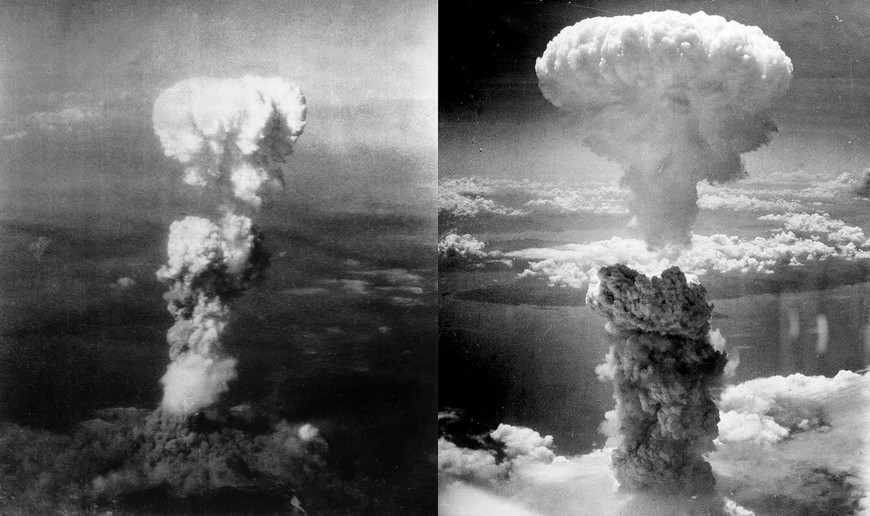
This too left a mark on me. Of course, once born, I remembered nothing of it. But I had been there and seen what occurs in both worlds at the epicenter of a nuclear explosion. This stayed in my deep memory and surfaced subconsciously as a fear of nuclear war. Ever since I was old enough to begin understanding the news reports about nuclear tests, it became my greatest nightmare. At the very thought of it, something inside me would freeze and tense with a suffocating, near-panic fear. I only managed to shake it off around the age of sixteen, under rather unusual circumstances. But that’s another story.
Back then, after Hiroshima and Nagasaki, I saw and understood even more clearly — with piercing clarity — where things were heading. And I understood that my waiting would soon be over. And so it was. Soon (in energy-world terms), I felt the time had come. What is that feeling like? Hard to describe in ordinary terms. Perhaps very roughly: it’s somewhat like the sense of an approaching departure from a home where you’ve lived many years. You know it’s only months now, then weeks, then days — and it feels like being torn from something you’ve grown into, like a tree rooted into the earth. At the same time, there’s a growing pull toward somewhere — and you know that at some point it will rip you away and carry you off, and there’s no resisting it.
Shortly before departing into a new birth, I saw Sher-Ander one last time, and he gave me his parting words. Then I saw, for the last time, the one who in my past life had been my cousin, and said farewell to him. But we parted in the literal sense “until we meet again”. For he had been granted the opportunity to be born around the same time and in the same city as I would be — so that he could be the first to set foot on the path of the Teaching. And when his time came a few years later, Sher-Ander met him and gave him the opportunity to confirm his decision to follow the Teaching — after which he gave the necessary parting guidance.
And I, having visited the places I wished to visit, and said goodbye to those I wished to bid farewell, returned to the stronghold and awaited the moment when an irresistible force would draw me into my final birth. That meant the moment when, in the right city, to the right parents, a child would be conceived. Why in that particular city? People often ask me that; and there was a time when I asked that same question of my Teacher, Emere (Hermes). From him I learnt that the first revelation, which likely occurred over 270,000 years ago, took place at the location where my city now stands. It left behind a special energy that has not faded to this day — because it was the first. The final revelation also created a unique energy. One might say the circle of time has closed; the chain of revelations ends where it began. My death will place the final point in that conjunction. When I die, the city of Homieĺ will become a place of immense power, where the energy of the Teaching and of the Eternal People will pour into the world.
I waited day after day, feeling a tension building, a moment of transition nearing (I don’t know what other word to use). But I never had time to realise the moment itself. No one ever does. Everything suddenly vanishes, and consciousness fades. And the next sensations are already those of a child, looking upon the world with new eyes.
© Atarkhat, 2016-2017