
Best Practice

In every religion — as well as, typically, in semi-religious and occult teachings — there are what are called “spiritual practices”. They are an important part of the spiritual path and can be very diverse: prayers, meditations, energy work, fasting, various forms of ascetic self-restraint, different psychological techniques, and so on. All these are intended to aid a person’s spiritual development, as understood by the respective religion or teaching.
In our time, religiosity in people has clearly diminished. Almost in opposition to this, society — or rather, the part of it that is actively interested in spiritual matters — is witnessing a rise in interest toward various practices. And since demand has grown, so too has supply. There are many “teachers” offering (usually for considerable fees) practices to suit every taste, shops abound with thematic literature, seminars and workshops are held. It would seem that, with the abundance of available practices, the overall level of spirituality should be rising. But it is not. The number of practices increases, while spirituality in society decreases. Why is this happening?
There are two main problems here. The first is that these practices and techniques, in their overwhelming majority, are torn from their worldview context. For example, Buddhist meditation techniques are separated from Buddhism and offered as something independent and self-sufficient. That is, according to those who offer and use them, one does not need to be a Buddhist to spiritually develop through them. And this is a major mistake. Any serious practice is based on a specific worldview, on principles and conditions arising from that worldview. To practise Buddhist meditation, one must perceive the world, its laws, humans, and their goals as Buddhists do, and lead a corresponding way of life. In other words, one must be a Buddhist. After all, meditation is a component of a spiritual system. Outside of that system or within an alien one, it does not work. Or rather, it operates in vain. It may seem that there is a positive effect and that something is improving — but in reality, this is not the case. However, all this opens up great opportunities for self-deception and falling into illusions. And there is a lot of this nowadays. The choice of various practices — from meditations to yogic techniques, from simple chakra work to complex manipulations with “qi” energy, from tantric sex to chanting “om” — is very broad. But in reality, all this is merely fragments of serious systems, useless outside them. Trying to use them is about the same as trying to drive on a car wheel that has been removed from the car. It is a naive approach in the spirit of “If it’s a wheel, then it should be possible to ride it”. And sometimes, it is even worse. Sometimes there are “wheels” that never had a car. Some self-proclaimed “expert” invents a practice based on nothing but his murky fantasies and advertises it as a great tool capable of turning any self-satisfied fool into a spiritual titan in just a few months of regular practice. And such fools flock to these offers like flies to sweet glue.
The second problem is that practices are often used as a kind of skeleton key, supposedly allowing one to “sneak” into the realm of spirituality through the back door. After all, finding a spiritual path and following it throughout one’s life is a great responsibility and a lot of work, plus a certain limitation of freedom (once you choose a particular path, you must stick to it, without trying to sit on two — or even more — chairs at once). But responsibility, hard work, and limited freedom (read: absence of permissiveness) are things that modern spiritual seekers deeply dislike… After all, they are ordinary consumers, desiring quick and impressive results with minimal effort and without the need to choose a path. Practices that do not require serious commitment to anything seem to them a convenient option. It is more pleasant to hope for a spiritual breakthrough after three months of meditating under the method of another Great Master (who learned from a Great Supermaster, who, in turn, studied directly in Shambhala itself) than after thirty years of following a path and persistent work on oneself. But that does not happen. Such practices help develop little more than vanity and pride. Although sometimes, a person engages in these practices all his life, trying all sorts of methods, each time feeling a seemingly clear beneficial change within himself — but each time it turns out that no significant changes have occurred, and so he searches further. In the end, after years and decades, he realises that time has passed, but nothing much has changed. And then he turns into an ordinary elderly layperson without significant spiritual aspirations, either recalling his pursuits as an exciting adventure or, on the contrary, avoiding remembering them, like one avoids recalling a bitter failure.
Yes: unfortunately, for many seekers, spiritual development today is associated mostly with such surrogate practices. And this not only fails to help them become better but often causes harm, contributing to the development of pride, impatience, the habit of seeking quick and easy paths, and simply mental and spiritual laziness.
Our Teaching, which has no such practices in its arsenal, appears, in this context, let us say, unusual. When I am asked what practices we use, and I reply, “None”, it causes surprise and confusion. Usually, one of two standard reactions follows: either, “Then this is an unserious teaching” or “Clearly, you do have practices, but you keep them secret”. This is how rigid thinking works, unable to go beyond the consumer stereotype. Practices are perceived as the only method to achieve something. Moreover, I emphasise, practices in their mass-market understanding, nurtured by occult and pseudo-spiritual literature — that is, meditation taken out of worldview context, mantras, chakra work, and the like. Such practices really are absent in the Teaching — as I inform the interested. After all, that is what they mean.
But what if we look at it from another angle? Can we say that there are fundamentally different practices? There are. I would even say, not practices, but a practice. One — but much broader. This is the right way of life. This is precisely what the followers of the Teaching practise.
It may seem that this sounds too simple. But that is only an impression. In reality, this is the most difficult of practices. And the most effective.
What is needed to learn how to lead the right life? First of all, knowledge is needed. One must understand how the world is structured, by what laws it lives, and what place humans hold in it. One must understand what is good and what is evil and be able to distinguish between them — and this is often very difficult. That is, one must learn and study — by studying the Teaching, observing life, accumulating and comprehending personal experience. Cognition and deep awareness are necessary. This is already difficult, as it requires desire, purposefulness, patience, serious intellectual work, and, simply, time and effort. Then, everything that has been learned, absorbed, and understood must be implemented in life. And this is even harder. First of all, it concerns the sphere of morals and ethics. One must strive to follow what is right (i.e., good), adhere to correct principles, fight one’s vices, and develop good qualities. This means persistent self-work, willpower, and self-discipline. Then, if possible, one should do something for the world and for people, helping them to become better, to be useful to society and Nature. Thus, a scheme of three main points emerges: knowledge, self-work, labour for the benefit of the world and people. All this, together, we call the right way of life. It is the best practice.
I said that it is the hardest but also the most effective of practices. So it is. Knowing the Truth is difficult — but it provides the right path. Even harder is the struggle against all that is negative within oneself. But it is precisely this that helps to develop the most valuable qualities. Hatred is replaced by love, laziness by diligence, frivolity by thoughtfulness, cowardice by bravery, weakness by steadfastness, hubris by modesty, and so on, and so on. The list could go on for a very long time. And how much determination, patience, courage, and will it takes to live by firm moral principles! It is very hard to live without lies, meanness, flattery, unjust violence, theft. It is not easy to forgo pleasures like greed, revenge, debauchery, intoxication with alcohol and drugs, self-admiration, idleness, and so on — for the statement that vice is pleasant did not arise without reason. Anyone who strives to change people and the world for the better will face numerous difficulties, obstacles, and dangers. This alone is an enormous effort, even if there were no opposing forces. But they do exist. All that is evil does not wish to surrender — it fights for its existence and for power, which ensures that existence and prosperity. That is why changing people and the world for the better is a constant struggle — always difficult, at times exhausting, sometimes even deadly. Yet it is precisely this work on oneself, these efforts, these labours and dangers that I speak of, that help a person become better, purer, kinder, wiser, and stronger. In other words, to become more perfect.
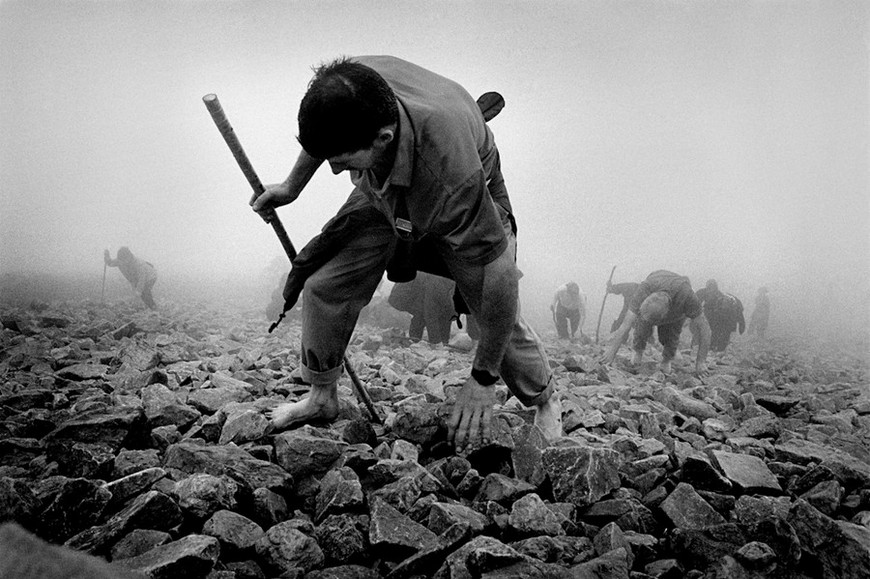
This entire process is one large practice. A practice lasting a lifetime. It is not something for which a couple of hours a day are spent, like at meditation workshops. One lives it. It is a school, a fighting arena, hard labour, a difficult journey through the mountains, when one moves upwards, skinning one’s feet on stones, falling and rising again — all rolled into one. It is the crucible where a person is tempered like steel, where the finest and most valuable qualities are forged. Our human qualities, so necessary to the Creator. Our human qualities, which perfect his soul.
When such a practice exists, all other practices lose their significance. They are simply unnecessary. For genuine intellectual, moral, and spiritual progress — progress that is guaranteed — a person does not need them. Of course, the universal practice I am speaking of is more difficult and, at times, more dangerous. But is it not naive to think that one can achieve true spiritual attainments by a short and relatively easy path? Such attainments come at a great cost, and the path to them is one’s entire life. The right life. The best possible practice. And the only truly necessary one.
© Atarkhat, 2017