
Life-long Path

Can significant spiritual progress be achieved in a short period of time? Many are convinced it is possible. One of the problems of modern society is that it is conditioned to satisfy its needs with substitutes, because it’s easier and quicker that way. People are becoming more and more impatient and superficial. When someone is hungry, they go to a fast food joint or buy some instant noodles (pour hot water on it, and eat); when they want to read a good book, they buy a version that’s been shortened by a third and adapted for the less intelligent (like the “War and Peace” version), or watch the movie adaptation, which has been maximally dumbed down and bears little resemblance to the original, except for the names of some characters. And, sadly, after this, they believe they truly know the book. A similar approach is forming towards the spiritual side of life. The consumer society’s disease has spread to this sphere as well.
Many of those on a spiritual quest are actually in search of the next serving of spiritual fast food. Usually, it’s the search for practices or courses that promise in record time — six months, or even just two or three months — large spiritual successes or even enlightenment, and the unlocking of abilities like clairvoyance, healing, etc. Shrewd teachers often even issue corresponding diplomas or certificates to those who complete the courses. The result of such “spiritual enlightenment” is usually self-satisfaction, an inflated ego (since the main thing developed by such methods is precisely self-importance), and the habit of looking down on various unenlightened people who are stumbling under the feet of the newly crowned spiritual giant. There are many who jump from one spiritual teaching to another, trying to skim the cream off everywhere without ever staying in one place for too long. After reading a couple of books or rubbing elbows with the followers of some teaching or religion, such a person will proudly declare, “I’ve deeply understood this path, and it has given me all it could,” and, like a spiritual leech, they move on to find the next thing to latch onto. Often, they simultaneously “follow” several incompatible teachings, reasoning that a good calf suckles from two cows. However, the psychology of a cow is no more helpful in a spiritual quest than the psychology of a leech. And all this would be very funny if it weren’t so sad.
In reality, it is impossible to achieve significant spiritual progress quickly. It requires long, persistent work on oneself. And this work must be carried out within the framework of one spiritual path. After all, it requires a foundation. One must understand the worldview that this path offers, comprehend its laws as much as possible, grasp the role of humanity within it, its possibilities and goals, understand the methods of achieving those goals, learn to apply them to oneself, and, in general, learn to live within this context and become a part of it. All of this is a matter of not months, not even years, but decades. A person often cannot fully understand themselves; let alone unravel such an expansive system of concepts, integrate psychologically into it, and achieve real success in improving oneself — this is an incredibly difficult task in every sense. It requires strong aspiration, diligence, attentiveness, will, perseverance, self-criticism, and patience. And these are precisely the qualities that many modern spiritual seekers lack.
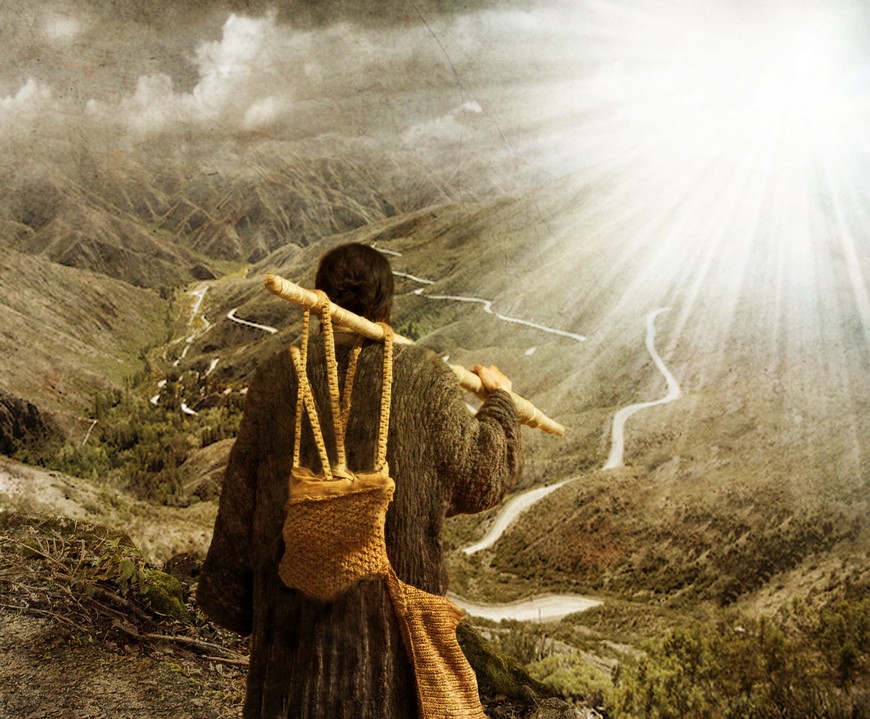
Throughout human history, this has been clear and even obvious to seekers. They sought a path by which they could live their lives, building their lives in accordance with it, gradually progressing forward. Spiritual successes were not thought of as separate from this path. A person would adopt a particular religion, intending not only to live their life according to it but also to accept the afterlife it promises. When becoming a disciple of a spiritual Teacher, a person followed his teaching throughout their life; the transition from Teacher to Teacher usually occurred within the same teaching. Of course, it was possible to transition from one teaching to another, but this was a serious decision, made with the intention of following the newly chosen path for life, not just picking something from it and moving on. As for practices, they were part of a particular teaching, requiring a deep understanding of it and were only applied within its context. Their purpose was not some abstract spiritual improvement, arising from nowhere, but the resolution of specific spiritual tasks posed by that teaching, solved using its methods, based on its worldview. In our time, this understanding has almost been lost. As a result, there are more and more spiritual seekers and spiritual practices, but less and less spirituality in society. All the steam is going out of the whistle.
The Teaching of the United Temple, in this sense, is traditional. Or, more accurately, it is sensible. It does not promise spiritual growth at a sprinter’s pace, nor does it guarantee enlightenment in four months, with an additional week for a clairvoyance course, because this simply doesn’t happen. Here, knowledge is offered, with which one will have to work intellectually and emotionally, responsibility, because it grows with the amount of knowledge, and the need to work for the benefit of the world and humanity, because understanding this necessity is what the knowledge and the awareness of responsibility lead to. Here, a path is offered, one that lasts a lifetime, because such a grand task as improving oneself requires great effort and a long period of time. And this is only in terms of oneself. To do something for others requires even more effort.
A disciple of the Teaching is someone who understands this and is ready for such a long path. They study the Teaching, first in general terms, then more in-depth, as much as they wish and can, they work on themselves, and, if possible, strive to bring benefit to the world and others. Practices like meditation, chakra manipulation, energy accumulation, and so on are not used in the Teaching. What’s the point of artificially stimulating one’s energy if one is not spiritually ready to work with it? Many think that working with energy and unlocking one’s energetic potential leads to spiritual growth. But this is the same as thinking that a car engine works because the wheels are spinning. In reality, it is the other way around. Spirit is primary, and energy is secondary; thus, spiritual development allows the energy potential to unfold. Practices in the Teaching are knowledge and right actions. You learn about the world and people, you learn to understand what is good and what is evil, you learn to want the good and act accordingly. Knowledge leading to understanding and awareness, and the volitional effort that helps make the right moral choice — that’s how the Spirit is perfected. And the purer it is, the more opportunities there are for unlocking energetic potential or extraordinary qualities and abilities. Though, there is no 100% guarantee. There is no guarantee simply because this is not the main thing. The pursuit of knowledge and practices solely for this purpose is a sign of immaturity or unhealthy vanity. Just like a child, having read some comics, thinks, “It would be cool to have superpowers!” or a show-off, who loves to draw, dreams of a prestigious car. The goal of spiritual development is not to unlock extraordinary abilities, their possible revelation is just a side effect; the goal is to become what a person should be for the Universe: a living vessel in which the precious part of the Creator’s soul is perfected. This is the very reason each disciple of the Teaching embarks on a path that lasts a lifetime.
Although life, in this case, is not the maximum unit of time. The path may continue after life, in the next life, and in all subsequent lives. Truth is Truth; and its path, passing through the chain of lives like a thread through pearls strung on a necklace, leads into the world of Spirit. But that’s a topic for another time.
© Atarkhat, 2016